
Best low-cost visual builder
MakeSee Make plansCategoryAI Automation & Agents
AI Automation & Agents
Updated June 28, 2026: compare n8n, Zapier, Make, Workato, Microsoft Agent Framework, Gumloop, Activepieces, AG2, Agno, CrewAI, Pydantic AI, BAML, DSPy, Instructor, Chainlit, Respan, OpenLIT, Opik, Inspect AI, Guardrails AI, LiteLLM, LlamaIndex, Haystack, Langflow, Langfuse, LangSmith, Braintrust, Patronus AI, DeepEval, Traceloop, Arize Phoenix, Ragas, OpenPipe, LangWatch, Portkey, Zep, promptfoo, LangGraph, Dify, Flowise, Composio, Firecrawl, Tavily, Mem0, Browserbase, Modal, Apollo, Lindy, and Pipedream by workflow, pricing unit, governance, and risk.
8.8/10Strong
Best technical workflow platform
$0 (Community self-host) - €667+/month (Business self-host)
Best technical workflow platform
n8n
Source-available workflow automation with native AI Agent nodes, self-host or cloud.
Editorial · no paid placements
Quick paths
Best non-technical SaaS coverage
ZapierSee Zapier plansBuyer path
Source-backed shortlist
Evidencen8n pricing
- Source
- Registered source
- Freshness
- Review due
- Confidence
- Low confidence
Best technical automation backbone
n8nn8n is the safest first shortlist when the buyer needs controllable workflow automation, unlimited users and workflows, execution-based pricing, and a technical owner for AI-agent steps.
Evidencen8n pricing
- Source
- Registered source
- Freshness
- Review due
- Confidence
- Low confidence
- Verified
Best non-technical automation rollout
ZapierZapier is the cleaner path when the buyer needs no-code AI automation, broad app coverage, MCP actions, and non-technical operators moving across SaaS tools quickly.
EvidenceZapier MCP guide
- Source
- Registered source
- Freshness
- Review due
- Confidence
- Low confidence
- Verified
Best open-source AI app platform
DifyDify is the stronger shortlist when the buyer needs agents, RAG apps, chatbots, workflows, APIs, and a Dify Cloud or self-host route rather than only app-to-app automation.
EvidenceDify pricing
- Source
- Registered source
- Freshness
- Review due
- Confidence
- Low confidence
- Verified
Best visual LLM workflow builder
FlowiseFlowise fits technical teams that want chatflows, AgentFlow V2, assistants, RAG, tracing, evaluations, and self-hosted LLM workflow experiments.
EvidenceFlowise introduction docs
- Source
- Registered source
- Freshness
- Review due
- Confidence
- Low confidence
- Verified
Best AgentOS-style framework
AgnoAgno fits developer teams that want an open-source SDK plus AgentOS control-plane path for agents, teams, workflows, memory, knowledge, traces, audit logs, and interfaces.
EvidenceAgno docs
- Source
- Registered source
- Freshness
- Review due
- Confidence
- Low confidence
- Verified
Best validated-output guardrail layer
Guardrails AIGuardrails AI fits automation teams that need reusable validators, Pydantic-style structured outputs, on-fail policies, and input/output guards before workflow actions run.
EvidenceGuardrails quickstart
- Source
- Registered source
- Freshness
- Current
- Confidence
- High confidence
- Verified
Best sandboxed agent eval framework
Inspect AIInspect AI fits automation teams that need repeatable code-defined evals for agentic tasks, tool use, sandboxed runs, scorers, and release evidence.
EvidenceInspect AI docs
- Source
- Registered source
- Freshness
- Current
- Confidence
- High confidence
- Verified
All tools in AI Automation & Agents
- 1
 Microsoft Agent FrameworkMicrosoft's open-source agentic AI engine, merging Semantic Kernel and AutoGen, now sitting beside the Work IQ, Foundry, Copilot Credits, and Agent 365 stack.
 - 2
 LangfuseOpen-source LLM engineering platform for observability, prompt management, evals, datasets, and OpenTelemetry tracing. ClickHouse acquired Langfuse in Jan 2026; cloud pricing starts free, with Core at $29/mo.
 - 3
 LangGraphLangChain's low-level orchestration runtime for long-running, stateful AI agents. MIT-licensed Python and JavaScript libraries; paid spend comes from LangSmith observability and deployment.
 - 4
 LinkedIn RecruiterLinkedIn's recruiting platform with Hiring Assistant, AI-assisted sourcing, candidate messaging, applicant review, projects, reporting, and hiring-system integrations.
 - 5
 n8nSource-available workflow automation with native AI Agent nodes, self-host or cloud.
 - 6
 HeliconeOpen-source LLM observability in one line of code. Free 10k requests/month. YC W23. AI Gateway adds model routing, cost optimization, caching, rate limits, and failover across providers.
 - 7
 IntercomAI-first customer support platform with Fin AI Agent, Fin AI Copilot for human agents, and unified inbox across chat, email, and help center.
 - 8ServiceNow (Otto / AI Control Tower)Enterprise agent/workflow control plane: ServiceNow Otto + AI Control Tower packaging for governed autonomous work across ITSM, employee workflows, and business operations.
- 9
 TinesSecurity-first workflow automation for IT and SOC teams, with Workbench, AI Agent actions, audit logs, RBAC, flexible hosting, and API-based integrations.
 - 10
 Apollo.ioAI-native B2B GTM platform with prospect search, enrichment, sequences, dialer, CRM sync, MCP/AI-assistant workflows, and deal execution in one subscription.Try Apollo.io freeAffiliate link; no extra cost to you.
 - 11
 BrowserbaseCloud browser infrastructure for agents, scraping, QA automation, and web data workflows that need managed Chromium, Fetch, Search, identity, runtime, and observability.
 - 12
 ClayGTM data and workflow platform for enrichment waterfalls, Claygent research, Sculptor natural-language workflow setup, Functions, MCP access from ChatGPT/Codex/Claude, native Sequencer, Ads audiences, and CRM/data-warehouse activation.
 - 13
 MakeVisual workflow automation platform with credit-based billing, 3,000+ app connectors, MCP, AI Toolkit, and transparent AI Agents for branching, loops, and data transformation.
 - 14
 Reclaim.aiReclaim.ai from Dropbox is an AI calendar for Google Calendar and Microsoft Outlook that defends focus time, schedules habits and tasks, and optimizes meetings.Try Reclaim.ai freeAffiliate link; no extra cost to you.
 - 15
 ZapierThe no-code automation incumbent with 9,000+ app integrations, Agents, Tables, Interfaces, Chatbots, and Central for AI-driven orchestration.
 - 16
 AdaEnterprise AI customer service platform. The ACX Platform now centers on autonomous customer-service agents, Playbooks, MCP-assisted optimization, Web Chat SDK control, and conversation-based enterprise pricing.
 - 17
 AG2Open-source AgentOS and AutoGen continuation for Python multi-agent systems. Current releases add MCP-server exposure, cross-process networking, sandbox abstractions, SkillPlugin, and Bedrock beta support.
 - 18
 AgnoApache-2.0 agent platform SDK and AgentOS control plane for building, running, observing, and managing production agent systems in your own stack.
 - 19
 CloudTalkAI business phone system for sales, support, ops, and hiring teams, with cloud calling, routing, AI dialers, CRM sync, Conversation Intelligence, AI Receptionist, and AI Specialist voice agents.Try CloudTalkAffiliate link; no extra cost to you.
 - 20
 DustTeam AI agent platform for custom assistants that search company data, execute actions, connect tools, and run in Slack, Chrome, Zendesk, and APIs, with Business Pro and Max self-serve seats plus Enterprise.
 - 21
 InstantlyCold-email sending platform focused on outreach campaigns, unlimited sending accounts, warmup, deliverability, unified inbox, and a separate Lead Finder buyer path.
 - 22
 ParadoxConversational AI recruiting platform best known for Olivia, with mobile apply, candidate screening, resume matching, interview scheduling, and candidate-experience automation.
 - 23
 PipedreamDeveloper-first workflow automation with inline JS, Python, Go, and Bash nodes, 3,000+ integrations, hosted MCP servers for 10,000+ agent tools, Pipedream Connect, and Workday ownership after the acquisition closed in fiscal Q4 2026.
 - 24
 SaneBoxML-based email triage for any inbox, with SaneLater, SaneBlackHole, Daily Digest, reminders, snooze, and request-only beta AI features for summaries and reply drafts.
 - 25
 WorkatoEnterprise iPaaS and agentic orchestration platform with Workato ONE, Agent Studio, Workato GO, MCP servers, and governance-heavy automation for large teams.
 - 26
 ActivepiecesOpen-source MIT-licensed automation platform. Free to self-host; cloud Standard is free for 10 flows, then $5 per active flow per month.
 - 27
 ClickUpAll-in-one work-management workspace for tasks, docs, chat, dashboards, automations, Brain AI, Super Agents, Brain MAX apps, MCP access, and AI Super Credit-based agent work.
 - 28
 DextBookkeeping automation for receipts, invoices, expenses, bank statements, and client document workflows before the data lands in accounting software.Start Dext trialAffiliate link; no extra cost to you.
 - 29
 Eightfold AIEnterprise talent intelligence platform for skills-based talent acquisition, talent management, workforce exchange, resource management, and workforce planning.
 - 30GooseOpen-source AI agent originally from Block, now governed by the Linux Foundation's Agentic AI Foundation. Desktop, CLI, and API across 15+ LLM providers with 70+ MCP extensions.
- 31
 hireEZAgentic AI recruiting platform built on the ATS for sourcing, screening, outreach, scheduling, rediscovery, applicant match, hiring intelligence, and CRM workflows.
 - 32
 Julius AIData analysis workspace that turns files, notebooks, databases, and Slack questions into Python, SQL, charts, slides, and scheduled reports.
 - 33
 LettaStateful agent platform (formerly MemGPT) with persistent, portable memory. Build agents that learn across sessions and survive model swaps.
 - 34
 TaskadeAI-native project workspace combining tasks, docs, mind maps, video chat, and custom AI agents in one real-time collaborative canvas.
 - 35
 VoiceflowNo-code AI agent builder for conversational apps across web chat, Slack, WhatsApp, Teams, and voice.
 - 36
 AmplemarketAI sales platform built around Duo Copilot, contact-level buying signals, multichannel sequencing, Workflows, MCP access from Claude and ChatGPT, and a 200M+ contact database.Try AmplemarketAffiliate link; no extra cost to you.
 - 37
 DifyOpen-source platform for building AI apps, agents, chatbots, workflows, and RAG systems, with Dify Cloud plus self-hosted Community, Premium, and Enterprise routes.
 - 38
 FlowiseOpen-source visual builder for AI agents and LLM workflows, with chatflows, agentflows, assistants, RAG pipelines, evaluations, tracing, teams, and self-hosting.
 - 39
 Hermes AgentSelf-improving open-source AI agent from Nous Research. v0.17.0 Reach Release, persistent memory, background subagents, image editing, desktop app, messaging platforms, and optional Nous Portal routing.
 - 40
 LindyAI work assistant for inbox, calendar, meetings, follow-ups, and custom business agents, with iMessage/SMS delegation and hundreds of app integrations.See Lindy pricingAffiliate link; no extra cost to you.
 - 41
 ManusGeneral-purpose autonomous agent that researches, codes, builds spreadsheets, and operates the web in a sandboxed VM, with June 2026 ownership and continuity risk around the Meta unwind.
 - 42
 OrkesDurable workflow and agent-orchestration engine from the creators of Netflix's open-source Conductor. Sits underneath LangGraph, CrewAI, and other agent frameworks rather than replacing them. Free Developer Edition, Enterprise pricing by quote.
 - 43
 RowsAI-native cloud spreadsheet with a built-in AI Analyst, the =AI() cell function, Python blocks, and 50+ data connectors in a Google Sheets-style workbook.
 - 44watsonx OrchestrateIBM's multi-agent governance and orchestration layer positioned as a control plane for deploying and managing heterogeneous enterprise agents under shared policy and visibility.
- 45
 GumloopYC W24 drag-and-drop AI workflow builder for marketing and ops teams. Free 5K credits, Pro $37/mo with 20K+ credits, unlimited seats, MCP hosting/proxying, and BYOK discounts.
 - 46
 OpenClawSelf-hosted open-source personal AI assistant that controls your computer, browser, and shell from 22+ messaging surfaces, with current fast-talk mode, DM pairing, and sandbox guardrails.
 - 47
 CrewAIOpen-source Python framework for orchestrating role-based multi-agent teams, plus Basic cloud and custom Enterprise deployment/monitoring. Public releases show 1.14.8 alpha builds and 1.14.7 release-candidate/alpha tags as of June 26, 2026.
 - 48
 GetResponseAll-in-one email marketing and automation platform. AI tools, landing pages, webinars, ecommerce, marketing automation workflows, and course creator. Starter $19/mo to Creator $69/mo plus Enterprise custom.
 - 49
 LangflowOpen-source visual canvas for LangChain-based LLM workflows, agents, MCP servers, and RAG pipelines. The June 2026 release line added Langflow 1.10 Desktop and 1.10.1 release candidates, while security patch pressure remains a production concern.
 - 50
 Relevance AINo-code AI workforce platform for agents, workforces, tools, and enterprise automation, billed through Actions plus Vendor Credits in the docs.
 - 51
 Hugging FaceOpen AI collaboration hub for models, datasets, Spaces, inference endpoints, evaluations, and enterprise ML workflows.
 - 52LiteLLMOpen-source LLM gateway and Python SDK for one OpenAI-compatible interface across 100+ model providers, with routing, virtual keys, spend tracking, guardrails, MCP, and enterprise controls.
- 53
 promptfooOpen-source LLM evaluation, red teaming, vulnerability scanning, guardrails, model security, MCP proxy, code scanning, and enterprise AI security testing.
 - 54
 FathomAI meeting assistant with unlimited free recording and transcription. Premium $20/mo, Team $19/user/mo, Business $34/user/mo add CRM sync and team search.
 - 55
 LlamaIndexOpen-source framework and managed LlamaCloud stack for building LLM agents over private data, RAG, document parsing, extraction, indexing, retrieval, workflows, and context augmentation.
 - 56
 Arize PhoenixOpen-source AI observability, tracing, evaluation, prompt engineering, experiments, and Arize AX hosting for teams improving LLM systems.
 - 57
 AssemblyAIVoice AI platform for speech-to-text, Universal 3.5 Pro preview, Universal 3.5 Pro Realtime, LLM Gateway, guardrails, and voice-agent APIs.
 - 58
 BraintrustAI evaluation, tracing, prompt playground, datasets, experiments, monitoring, human review, and observability infrastructure for teams shipping LLM products.
 - 59
 DeepgramSpeech AI API platform for speech-to-text, text-to-speech, audio intelligence, and real-time voice agents with usage-based pricing.
 - 60
 DSPyMIT-licensed framework from Stanford for programming, optimizing, and evaluating language-model systems with signatures, modules, metrics, optimizers, agents, and structured inputs/outputs.
 - 61
 GleanEnterprise work AI platform combining permission-aware search, assistant, agents, connectors, APIs, and MCP access to company knowledge.
 - 62
 HarveyDomain-specific AI platform for legal and professional services. Assistant, Vault, Knowledge, Contract Intelligence, Command Center, and Agents run across legal workflows with current Harvey product updates.
 - 63
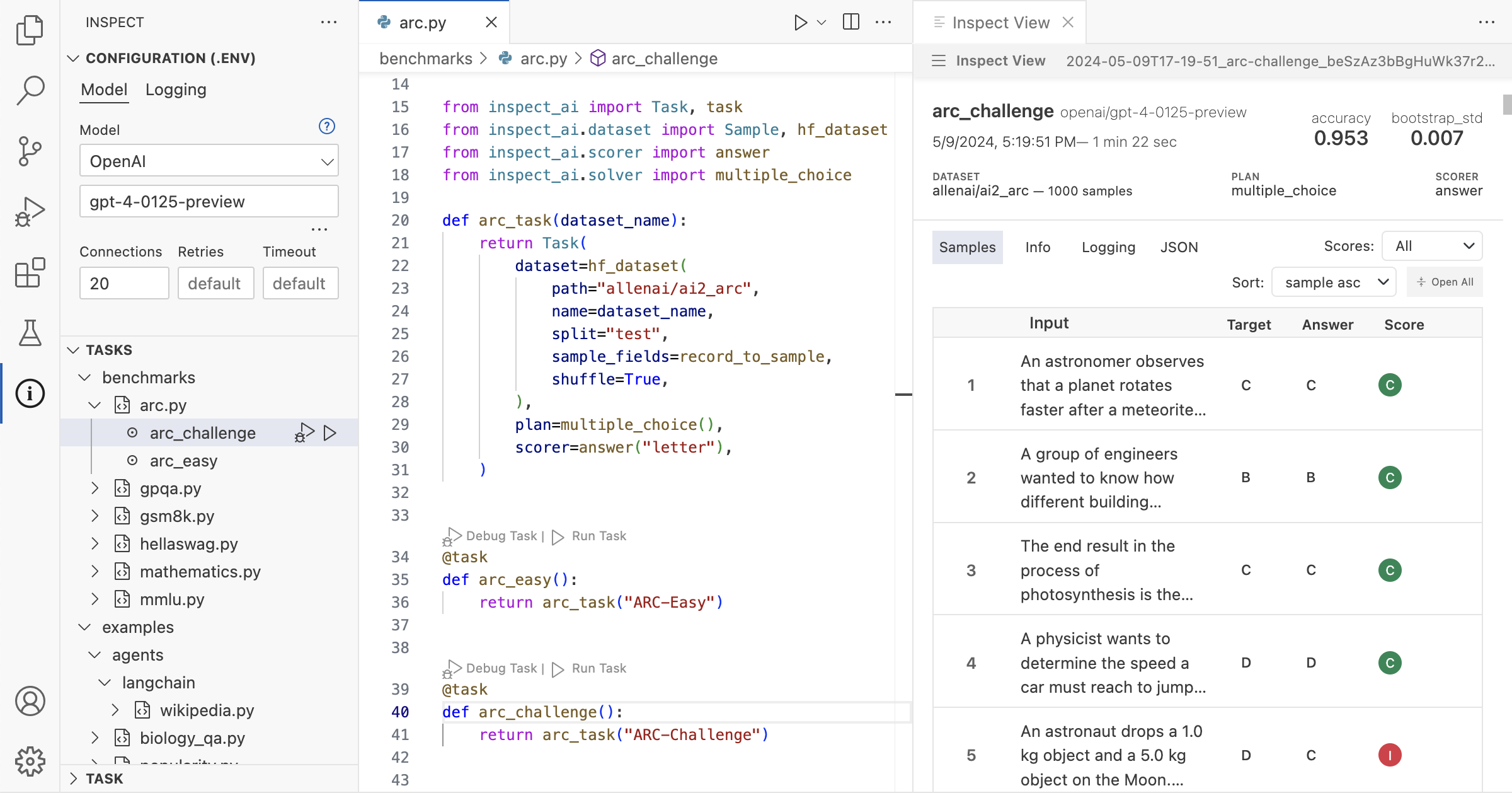 Inspect AIMIT-licensed evaluation framework from the UK AI Security Institute and Meridian Labs for coding, agent, reasoning, knowledge, behavior, and multimodal model evals.
 - 64
 LangSmithLangChain's hosted agent and LLM observability platform for tracing, monitoring, evaluation, prompt workflows, deployment, sandboxes, Fleet agents, and Engine optimization.
 - 65
 ModalServerless cloud for Python, GPUs, jobs, web endpoints, sandboxes, queues, and AI apps that should scale without managing infrastructure.
 - 66
 PortkeyLLM gateway, observability, prompt management, routing, guardrails, governance, caching, and cost controls for production AI applications.
 - 67
 Together AIAI infrastructure platform for serverless inference, dedicated GPU deployments, fine-tuning, code sandboxes, and open-model training workflows.
 - 68
 WeaviateOpen-source vector database and managed cloud for RAG, semantic search, hybrid search, multi-tenancy, embeddings, and AI-native retrieval.
 - 69BAMLApache-2.0 language and toolchain from BoundaryML for typed LLM functions, generated clients, structured outputs, robust parsing, tests, streaming, multimodal inputs, and Boundary Studio traces.
- 70
 DeepEvalOpen-source LLM evaluation framework from Confident AI for metrics, test cases, RAG evals, agent evals, tracing, datasets, and CI-friendly quality gates.
 - 71
 HaystackApache-2.0 AI orchestration framework from deepset for production LLM apps, RAG systems, agents, multimodal search, reusable components, pipelines, tools, and document stores.
 - 72
 MastraTypeScript framework and platform for building AI agents, workflows, RAG, memory, evals, and production APIs. Apache 2.0 framework; paid platform starts at Teams $250/month plus usage meters.
 - 73
 MeetGeekAI meeting assistant for teams that need recorded calls, 100+ language transcripts, summaries, action items, meeting-library chat, CRM/task automation, and customer-success follow-through.Try MeetGeek freeAffiliate link; no extra cost to you.
 - 74
 OpenRouterUnified LLM API for hundreds of models, with OpenAI-compatible requests, provider routing, fallbacks, app attribution, and per-model token pricing.
 - 75
 Perplexity CometPerplexity's AI browser, combining answer-engine search with page context and agentic browsing.
 - 76
 PineconeManaged vector database for semantic search, hybrid search, RAG, recommendations, Pinecone Assistant, and production AI retrieval workloads.
 - 77
 Pydantic AIMIT-licensed Python agent framework from the Pydantic team, built around typed agents, structured outputs, tools, dependencies, MCP, evals, graph workflows, and Logfire observability.
 - 78
 QdrantOpen-source vector database written in Rust, with managed cloud, Free/Standard/Premium tiers, hybrid/private cloud options, metadata filtering, payload indexes, and RAG-ready retrieval.
 - 79
 RagasOpen-source evaluation framework for LLM apps, RAG systems, metrics, synthetic test data, experiments, and cost-aware eval loops.
 - 80
 WriterEnterprise generative AI platform running its own Palmyra LLM family. Covers writing, agents, and knowledge work with enterprise governance baked in.
 - 81
 BeehiivNewsletter platform for creator-owned publishing. Pairs newsletters, websites, podcasts, AI writing, auto-translation, MCP operations, referrals, ads, Boosts, digital products, webinars, and premium subscriptions.
 - 82
 DiaAI-native browser from The Browser Company, now part of Atlassian, built around tab context, proactive suggestions, connected work apps, and assistant browsing workflows.
 - 83
 LangWatchOpen-source LLMOps platform for traces, evaluations, datasets, AI gateway workflows, DSPy optimization, self-hosting, and monitoring.
 - 84
 Mem0Memory layer for AI agents that persists user, session, and agent context across conversations, with a managed Platform and Apache-2.0 open-source self-hosting path.
 - 85
 OpenLITApache-2.0, OpenTelemetry-native LLM observability platform for traces, metrics, costs, prompts, evals, dashboards, and GPU monitoring.
 - 86
 OpenPipeFine-tuning, request logging, datasets, evaluations, DPO, and hosted inference for turning expensive prompts into cheaper specialized models.
 - 87
 OpikOpen-source and hosted AI observability and evaluation platform from Comet for agent traces, test suites, LLM-as-judge metrics, and production monitoring.
 - 88
 Patronus AIAI evaluation and simulation infrastructure for LLM apps, agent debugging, evaluators, traces, datasets, prompts, guardrails, and Digital World Models.
 - 89
 Read AIAI meeting assistant and productivity layer for meeting reports, transcription, summaries, coaching, Search Copilot, integrations, and digital twin workflows.
 - 90
 Retell AIPay-as-you-go platform for AI voice agents and chat agents, with component pricing, templates, analytics, transcripts, knowledge bases, batch calls, webhooks, API access, and enterprise call infrastructure.
 - 91
 TavilyReal-time search, extract, crawl, map, and research APIs for AI agents and RAG workflows, priced by API credits.
 - 92
 TraceloopOpenTelemetry-based LLM observability and evaluation platform built on OpenLLMetry for traces, quality checks, prompt management, experiments, and enterprise AI monitoring.
 - 93
 ZepProduction agent memory and context engineering platform with temporal context graphs, credit-based plans, hosted cloud, BYOK, BYOC, and Graphiti open-source context graph work.
 - 94
 Base44Wix-owned AI app builder for React/Vite apps with managed NoSQL, auth, backend functions, integrations, custom domains, and Builder-tier GitHub sync.
 - 95
 CodeRabbitAI code review platform for pull requests, IDE reviews, CLI reviews, CodeRabbit Plan, and Slack agent workflows. Pro is $24/user/month annual; Pro+ is $48/user/month annual.
 - 96
 ComposioTool-calling and MCP infrastructure for AI agents, with 1000+ app toolkits, managed authentication, session tools, hosted MCP URLs, and usage-based pricing.
 - 97FactoryAI-native software development platform built around Droid agents for CLI, desktop, SDK, code review, QA, missions, Slack, Linear, GitHub, and enterprise deployments.
- 98
 Galileo AIText-to-UI design tool acquired by Google in May 2025 and relaunched as Google Stitch. The Galileo brand is retired; the underlying product is free through Google Labs.
 - 99
 Guardrails AIApache-2.0 guardrails framework and Hub for validating, structuring, and quality-controlling LLM inputs and outputs with reusable validators.
 - 100
 TactiqBrowser-side AI meeting transcription for Google Meet, Zoom, and Microsoft Teams that runs without a bot in the room, with instant AI summaries and action items.
 - 101
 CastmagicAI content workspace for podcasters, creators, and content teams. One recording can become transcripts, show notes, clips, campaign drafts, social posts, newsletters, and searchable media-library context.
 - 102
 FirecrawlWeb data API for AI agents that search, scrape, crawl, parse, monitor, and interact with pages, then return LLM-ready markdown, HTML, screenshots, or structured data.
 - 103
 QodoAI code review platform for pull requests, IDE review, credit-based team review, context-aware rules, and enterprise SDLC governance.
 - 104
 RespanLLM engineering platform, formerly Keywords AI, for observability, evals, prompt management, and an OpenAI-compatible gateway across many model providers.
 - 105
 Bland AIEnterprise AI phone-call platform that runs on its own proprietary voice infrastructure, built for regulated industries with SOC 2, HIPAA, PCI, and GDPR coverage and a white-glove Forward Deployed Engineer onboarding.
 - 106
 GensparkAll-in-one AI workspace and agent platform. Plus and Pro bundle frontier-model access, Super Agent, slides, sheets, docs, code, design, calls, and storage credits.
 - 107
 TanaAn agentic meeting platform where AI agents join your calls, transcribe them, and turn the discussion into documents, tasks, and a context graph during the meeting.
 - 108
 TypefaceEnterprise AI content platform. Arc Agents, Arc Graph, Arc Spaces, and Arc Forge combine into a marketing orchestration engine with brand-grounded text and image generation.
 - 109
 VapiDeveloper platform for building, testing, and deploying real-time voice AI agents that make and take phone calls, with bring-your-own model, voice, and transcriber.
 - 110BLACKBOX AIMulti-model AI coding platform with chat, app builder, coding agent across 35+ IDEs, terminal/web workflows, voice agent, cloud, CLI, API, mobile, and low-cost paid plans.
- 111TidioLive chat plus Lyro AI agent for SMB ecommerce and SaaS support. Resolves up to 67% of common customer questions before a human sees them.
Quick Decision
AI automation now splits into four buyer jobs: deterministic workflow automation, AI-assisted workflow building, delegated agent workforces, and vertical revenue/support automation. Do not buy by hype. Start with the workflow owner, the billing unit, and the failure risk.
June 24 Microsoft agent-framework update: Microsoft Agent Framework remains the Microsoft-aligned open-source agent framework, but the current check sharpens the watch-out. GitHub releases now show python-1.9.0 from June 18 and dotnet-1.10.0 from June 10, with recent breaking guardrail, file-access, hosting, and approval-flow notes, so production teams should pin package versions. Work IQ is generally available: Microsoft’s licensing and Partner Center notices say Work IQ API SKU/subscription/per-user license, and should be governed with admin billing, access policies, limits, and alerts before custom or third-party agents use Microsoft 365 data. Do not treat Work IQ-backed agents as free just because Agent Framework itself is MIT open source.
June 16 Google Cloud data-agent update: Google’s data-agent rollout moves automation deeper into governed analytics and database workflows. Data Engineering Agent and Managed MCP, Gemini Enterprise Conversational Analytics, Data Insights Agent, Deep Research Agent, QueryData, and UCP Analytics are preview or select-customer routes. Treat this as an automation-control-plane update: verify IAM, roles/mcp.toolUser, separate production identities, SQL review, spend limits, job labels, data retention, and GA-versus-preview status before agents touch production data.
June 23 Activepieces vs n8n update: Activepieces remains the open-source, self-hostable automation pick, and n8n remains the stronger default for technical production workflows. The Activepieces vs n8n listings, and simple active-flow pricing on the Activepieces side; execution-based hosted cloud, code nodes, AI Agent nodes, and deeper governance tiers on the n8n side.
June 23 Activepieces vs Zapier update: Activepieces vs Zapier covers the direct open-source automation fork: Activepieces for MIT self-hosting, active-flow pricing, 754 pieces, and MCP-first workflow control; Zapier for 9,000+ apps, 30,000+ MCP actions, managed no-code rollout, and Team/Enterprise governance.
June 23 Ada update: Ada role-based access control, coaching creation, multilingual Knowledge ingestion, Web Chat SDK-assisted resource changes into the buyer checklist. The platform FAQ still frames Ada around enterprise-scale outcomes while pricing remains demo-led with conversation-based pricing as the primary public model.
June 23 Apollo update: Apollo remains the all-in-one outbound GTM pick, but the current refresh keeps the read on “AI-native GTM operating layer” instead of “prospect database plus sequencer.” Official pricing still exposes Free, Basic, Professional, and Enterprise buying routes, while live card amounts, fair-use rules, credit bundles, add-ons, and account packaging decide real cost. May release notes add Apollo on Perplexity, MCP guided sequence and bulk-action reviews, Apollo CLI, Codex integration, AI Assistant admin/view updates, ChatGPT workflows, contact-level website visitors, Gong call import, and removal-request compliance permissions, CRM writes, sequence enrollment, deliverability, and opt-out handling.
June 3 agent-stack update: Microsoft’s Build 2026 Work IQ and Foundry announcements, GitHub’s Copilot SDK GA plus AI Credits migration, NVIDIA’s enterprise and physical-AI agent stack, and the enterprise-agent roundup make one rule sharper: agents are safest when they inherit permissioned context, log actions, expose spend, and route risky writes through review. Generic “autonomous” claims are weaker than tenant boundaries, tool scopes, audit logs, budget controls, and task-specific runtime evidence.
June 12 local-agent update: OpenClaw stays in the high-control, high-risk lane. The current GitHub README shows 22+ supported messaging surfaces, DM pairing defaults, explicit public-DM opt-in, openclaw doctor, and non-main sandbox guidance, while June 2026 security coverage reinforces the same buyer rule: do not expose privileged agents to messages, browsers, files, or gateways without patching, allowlists, sandbox policy, and owner accountability.
June 21 comparison-policy update: AiPedia deleted false vs pages that compared different buyer jobs. Use direct comparison pages only when tools are plausible substitutes for the same workflow. For adjacent-but-different jobs, use this category page, buyer guides, or alternatives sections instead.
June 5 automation comparison update: AiPedia rebuilt the high-intent automation fork across Instantly vs Intercom, Instantly vs Make, Instantly vs Zapier, Intercom vs Make, and Intercom vs Zapier. The retired n8n/Make/Zapier comparison now belongs in category and tool guidance because visual workflow orchestration, broad no-code app automation, and self-hosted technical AI workflows are different buying jobs.
Use n8n when a technical founder, ops engineer, or agency wants control. n8n’s current pricing page says plans include unlimited users, unlimited workflows, every integration, and monthly workflow-execution billing rather than per-step billing. As of the June 24 spot-check, hosted Starter is still listed at EUR20/month billed annually, hosted Pro at EUR50/month billed annually, Business at EUR667/month billed annually for self-hosted teams, and the Community self-host path remains free. The current AI Agent docs still standardize AI Agent nodes around Tools Agent behavior, while n8n’s hosting docs warn that self-hosting is for expert users because server, scaling, and security mistakes can cause data loss or downtime. Buyers should also model the Business license-key ping, default telemetry setting, and EUR4,000 per 300,000-execution overage bucket before treating paid self-host as a simple isolated deployment. This makes n8n the strongest default for complex AI workflows when someone can own credentials, logs, retries, and security.
Use Zapier when non-technical teams need the fastest SaaS connection path. Zapier’s current pricing and AI pages frame the platform around Zaps, Tables, Forms, MCP, Copilot, Agents, and more than 9,000 apps. The June 4 ChatGPT vs Zapier refresh keeps the distinction explicit: ChatGPT is the thinking and drafting assistant; Zapier is the workflow execution layer when SaaS actions need to run repeatedly. It is still the cleanest recommendation when app coverage and speed matter more than self-hosting or code-level control.
Use Make when visual workflow clarity and low entry price matter. Make’s June 25 pricing check lists a free plan with 1,000 credits/month and 3,000+ apps, plus Core at $9/month, Pro at $16/month, Teams at $29/month, and Enterprise custom at the 10K-credit selector. Its AI Agents and pricing surfaces position Make around transparent agents built inside the Make canvas, reusable agents across workflows, MCP, AI Toolkit, AI Web Search, Make Code App credit usage, and 350+ AI apps across 3,000+ app connectors. The refreshed June 5 comparisons keep Make separate from Instantly-style sending and Intercom-style support: Make should orchestrate those systems, not replace their domain workflows.
Use Gumloop, policies, and guardrails. Gumloop is a stronger fit for agent-heavy workflow building than a generic “connect two apps” use case. The June 23 check keeps credit testing central: Pro lists 20K+ credits, unlimited seats, app policies, one hosted MCP server, three MCP server proxies, BYOK gives 50 percent off AI model credits on Pro or Enterprise, and overage costs $0.007 per credit when enabled. Teams should still test workflow, agent, MCP, and enrichment nodes separately before assuming every AI step is cheap.
Use Taskade when automation belongs inside project work. The June 25 check keeps Taskade in the AI workspace lane: tasks, docs, mind maps, automations, Genesis apps, agents, model routing, and MCP live beside the team’s project state. Public pricing still shows workspace tiers from Free through Starter $6/mo, Pro $16/mo, Business $40/mo, Max $200/mo, and Enterprise $400/mo, but the help-center table can disagree on monthly-style prices, so buyers should confirm the billing toggle before renewal.
Use Reclaim.ai when automation starts with the calendar. The June 27 pricing check keeps Reclaim.ai branded from Dropbox, supports Google Calendar and Microsoft Outlook, and positions AI agents around tasks, habits, scheduling links, smart meetings, and team availability. Start with Reclaim when the job is calendar defense, focus-time protection, and task scheduling; use the Reclaim.ai pricing guide when the buyer is choosing Lite, Starter, Business, Enterprise, or Smart Meeting AU add-ons. Skip it if the buyer needs a broad workflow router or an Outlook rollout that depends on delegated/shared calendars, hosted Exchange, Teams status, or Outlook Tasks.
Use SaneBox when automation starts with inbox triage. The June 27 check keeps SaneBox as the server-side inbox classification lane: SaneLater, SaneBlackHole, Daily Digest, reminders, snooze, and client-agnostic filtering matter more than AI branding. Treat SaneDrafts/Reply Draft and SaneSummary as request-only beta AI features, not the reason to buy the product. Use the SaneBox pricing guide when the buyer is choosing Appetizer, Snack, Lunch, or Dinner.
Use Relevance AI when the purchase question is an AI workforce. The June 25 check still finds the public pricing page foregrounding Enterprise contact-sales packaging, while docs define Actions, Vendor Credits, rollover behavior, paid top-ups, and BYO API keys on paid plans. Treat old Pro/Team prices as historical unless the app or sales confirms them.
Use ServiceNow when enterprise AI automation needs a governance/control tower. The June 25 check keeps ServiceNow in the governed autonomous-work lane: AI Control Tower now has a dedicated product-page route, while Otto, Action Fabric MCP, Build Agent, Workflow Data Fabric, and AWS Bedrock AgentCore/Kiro context remain procurement checks. Verify SKU timing, availability, and whether the exact Control Tower capability is GA, preview, or roadmap in the buyer’s contract.
Use watsonx Orchestrate when agent sprawl crosses IBM, partner, and non-IBM stacks. The June 10 check moves it from pure Think 2026 announcement coverage into more concrete procurement questions: IBM docs now reference agent metric monitoring in watsonx.governance, Partner A2A agents, partner catalog purchases, structured chat data, voice/SIP/Genesys support, audit logs, Premium data isolation, and agentic plan/add-on meters. It is a control-plane shortlist, not a lightweight Zapier/n8n substitute.
Use Workato when enterprise integration depth and governed agentic orchestration matter more than self-serve pricing. The June 10 check confirms Workato’s direct-customer model is still a platform edition fee plus usage fee, with Workato One adding agentic capabilities above Enterprise. Agent Studio genies, Workato GO, and MCP are the AI reasons to shortlist it, but MCP availability is region-scoped and contract-dependent, so buyers must verify edition, usage capacity, OPAs, concurrency, Agent Studio, GO, MCP, and data-center terms in writing.
Use Tines when security, IT, or compliance teams need workflow runs that hold up in audit. action broader than the old FAQ wording. The practical purchase question is not app count; it is AI run-time credits, package limits, logs, SSO/SAML, flexible hosting, and whether a SOC or IT team can own the workflow safely.
Use Activepieces when open-source workflow automation, self-hosting, and MCP-mediated workflow control matter. The June 23 check keeps Standard pricing at 10 free active flows and then $5 per active flow per month, confirms 754 pieces and 754 MCP listings on the live catalog surfaces, and keeps the product-change story around 0.85.4, AI-ready metadata, Mistral AI support, formulas, data manipulation triggers, admin health metrics, MCP flow tooling, and self-host reliability fixes.
Use AG2 when the buyer wants an open-source multi-agent workflow canvas. The June 23 release check keeps AG2 v0.13.4 from June 12 as current after v0.13.3 added cross-process Network, sandbox protocol work, background-agent tooling, A2A fixes, and evaluation improvements. v0.13.4 then added AG2 Agent-as-MCP-server support, OAuth Resource Server authentication, SkillPlugin support, Bedrock Beta client support, decoupled usage reporting, and governance examples. It is more AgentOS-shaped than the old page implied, but still a developer framework, not a non-technical ops platform.
Use Agno when the buyer wants an owned AgentOS-style platform for production agents. The June 28 check adds Agno as the Apache-2.0 SDK and control-plane lane for agents, teams, workflows, memory, knowledge, traces, audit logs, runtime storage, and interfaces. Free open source is the validation path, Pro is $150/month for managing production systems, and Enterprise is custom. Treat permissions, secrets, model budgets, memory retention, and human review as part of the implementation.
Use CrewAI when Python developers want role-based multi-agent orchestration. The June 23 check found CrewAI 1.14.7 as the current stable release and a public pricing split of Free Basic cloud plus custom Enterprise. It belongs here as a framework/cloud-control-plane option, not as a no-code workflow builder.
Use Pydantic AI when Python teams want typed agent code instead of a visual workflow canvas. The June 28 check adds it as the Pydantic-native framework lane: typed agents, structured outputs, dependencies, tools, MCP, evals, graph workflows, and provider choice. It is MIT-licensed, but production spend still comes from models, hosting, storage, observability, and engineering ownership.
Use DSPy when automation prompts need measurable optimization. DSPy belongs here when a repeated agent or workflow step has examples, metrics, and a clear target behavior. It is not a no-code automation builder; it is a coding framework for signatures, modules, metrics, and optimizers, with model-call and data-work costs outside the framework.
Use Langflow when the buyer wants a visual LangChain/LangGraph/RAG automation router. The June 23 check keeps the post-DataStax-hosted shutdown warning front and center, with the June 2026 release story focused on v1.9-v1.10 memory and stability work. Langflow remains a good prototyping and deployable-flow path, but production teams should pin versions, monitor security releases, and verify managed-hosting terms before treating it as a no-maintenance hosted workflow system.
Use Langfuse when the automation stack needs LLM observability, prompt management, datasets, and evals rather than another workflow router. The June 23 source check keeps the Cloud ladder at Hobby free, Core $29/month, Pro $199/month, Teams add-on $300/month, and Enterprise $2,499/month, with paid overage listed at $8 per additional 100k units before volume discounts. It is the better fit when agents and automations need traces, quality scoring, prompt experiments, and source-backed debugging.
Use LangGraph when engineering needs a low-level orchestration runtime for durable, stateful agents. The June 23 check keeps the library free/MIT while LangSmith carries the paid layer: Developer $0/seat/month, Plus $39/seat/month, Enterprise custom, and pay-as-you-go trace/deployment meters. It belongs in this category for production agent architecture, not no-code operations routing.
Use LangSmith when automations and agents need traces, evals, prompt workflows, deployment, and monitoring. The June 28 check keeps Developer at $0/seat/month, Plus at $39/seat/month, and Enterprise custom, but production teams need separate limits for trace volume, extended retention, deployment runs, deployment uptime, sandboxes, Fleet, Engine, and model/API spend.
Use Braintrust when agent automation needs release-quality evals. Braintrust is not a workflow builder; it is the evidence layer for datasets, experiments, traces, scores, prompt comparisons, monitoring, and human review before an agent change ships.
Use OpenLIT when automation traces should fit OpenTelemetry. OpenLIT is relevant when agent workflows need self-hosted traces, metrics, token and cost tracking, prompt workflows, evals, dashboards, vector database monitoring, and GPU visibility. Cloud pricing was not public in the June 28 check, so treat it as an engineering-owned self-host route first.
Use Opik when automation changes need agent eval evidence. Opik belongs beside agent rollouts that need step-by-step traces, Test Suites, assertions, LLM-as-judge metrics, annotation queues, and production monitoring. Free Cloud is useful for early checks, but span volume and retention decide the paid path.
Use Inspect AI when agent automations need sandboxed, repeatable evals. Inspect AI belongs here when a workflow uses tools, browsers, code, files, or long-horizon agent actions and the team needs datasets, agents, tools, scorers, Inspect View, and sandbox runs before live rollout. It is an eval framework, not a no-code automation platform.
Use Guardrails AI when automation outputs must be validated before actions run. Guardrails AI belongs here when extracted fields, classifications, tool arguments, or workflow decisions need validators, Pydantic-style outputs, Hub installs, on-fail policies, and input/output guards. It reduces unchecked model output risk, but it does not replace traces, evals, or human review for high-risk actions.
Use Arize Phoenix when automated agents need OpenTelemetry-native trace evidence. Phoenix belongs in automation when an agent workflow needs traces, evals, prompt iteration, datasets, and experiments tied to real runs rather than only task success screenshots.
Use Traceloop when agent observability should ride on OpenTelemetry. Traceloop belongs here when automations need OpenLLMetry traces, quality checks, prompt/model change testing, alerts, and ServiceNow AI Control Tower alignment. Confirm product-roadmap and procurement details because Traceloop is joining ServiceNow.
Use LangWatch when automation teams want open-source LLMOps. LangWatch belongs here when traces, evals, datasets, DSPy optimization, self-hosting, and event-sourcing operations need to surround agent workflows before they reach users or tools.
Use Respan when automation prompts, evals, and gateway traffic need one evidence trail. Respan is relevant when an agent workflow needs traces, metrics, evals, prompt management, monitors, spend limits, and an OpenAI-compatible gateway tied to production traffic. Verify Team pricing, retention, data posture, and gateway latency before routing sensitive automations through it.
Use Patronus AI when agent automation needs managed reliability evidence. Patronus belongs beside agent rollouts that need evaluators, traces, datasets, comparisons, guardrails, Percival-assisted eval creation, and Digital World Model simulation research before risky workflows touch live systems.
Use Ragas when automation evals are code-first. Ragas is useful when developers need open-source metrics, synthetic test data, and repeatable RAG or LLM evaluation inside CI or notebooks instead of a managed dashboard first.
Use DeepEval when automation evals should be broad LLM tests in code. DeepEval fits agent and RAG automation teams that want metrics, test cases, tracing, safety checks, and CI gates before adding a hosted Confident AI workflow.
Use OpenPipe when repeated automation prompts can become cheaper specialized models. OpenPipe is relevant when logged agent calls, classification prompts, extraction tasks, or support automations have enough clean examples and stable outputs to justify fine-tuning.
Use BAML when automations need typed LLM calls. BAML is relevant when prompt outputs need generated clients, type safety, robust parsing, tests, streaming, multimodal inputs, and optional Boundary Studio traces before they trigger downstream workflow actions.
Use Instructor when automation steps need validated structured outputs. Instructor is the lightweight MIT library lane for JSON, Pydantic-style schemas, retries, and provider adapters. It is useful before workflow actions depend on extracted fields, classifications, or tool arguments, but it does not replace evals, traces, or human review.
Use LiteLLM when automated AI traffic needs a self-hosted gateway. LiteLLM is relevant when agents and workflows call multiple model providers and need an OpenAI-compatible proxy, routing, virtual keys, budgets, guardrails, MCP, spend tracking, and enterprise gateway controls. Review latency, fallback quality, logs, and provider bills before putting it in the live path.
Use LlamaIndex or Haystack when automations depend on retrieval and private data. LlamaIndex is the context-augmentation and agents-over-data framework lane, while Haystack is the component-and-pipeline framework lane for RAG, document stores, tools, and agents. Both need retrieval evals, access-control review, model budgets, and hosting ownership.
Use Portkey when automated AI traffic needs gateway governance. Portkey is relevant to automation teams that route model calls through prompts, guardrails, keys, budgets, caching, logs, and provider policy before agents touch live systems.
Use Zep when automated agents need persistent memory. Zep belongs here when the workflow depends on scoped user/session memory and temporal context graphs, not only one-off prompts or retrieved documents.
Use promptfoo when automation needs red-team and guardrail testing. promptfoo is the testing lane for jailbreaks, vulnerability scans, model security, MCP proxy checks, code scanning, and repeatable eval gates before agents are exposed to users or tools.
Use Dify when automation is really an AI app platform decision. The June 28 check adds Dify as the open-source route for agents, agentic workflows, chatbots, RAG apps, APIs, Dify Cloud, and self-hosted Community Edition. Start with Sandbox or Community self-hosting, then verify message credits, model spend, workspace limits, plugins, and paid self-hosted edition terms before buying.
Use Flowise when technical users want a visual LLM workflow builder. The June 28 check keeps Flowise in the open-source visual-agent lane: Assistant, Chatflow, Agentflow, AgentFlow V2, RAG pipelines, tracing, evaluations, API routes, and self-hosting. Cloud Starter pricing is not published in the docs, so verify checkout before standardizing on Cloud.
Use Chainlit when an automation workflow needs a quick conversational review surface. Chainlit is not a no-code automation platform, but it can expose RAG, agent, or internal workflow prototypes as Python chat apps. Production teams still own auth, persistence, monitoring, UX polish, and support route checks.
Use Letta when the agent’s memory must persist across sessions and model swaps. The June 23 check keeps Letta Code Free, Pro $20/month, and Enterprise custom, with Letta Auto quota on Pro, pay-as-you-go overage, and usage-based API Platform billing tied to underlying model token costs. It is strongest when memory governance is a product requirement, not when the job is a stateless workflow.
Use Mem0 when the automation product needs persistent user, session, or agent memory. The June 28 check adds Mem0 as the managed-or-self-hosted memory layer for agents. Use it only with deletion, consent, privacy, and memory-quality controls because bad or stale memories can make agents feel wrong or invasive.
Use Browserbase when automation needs reliable cloud browsers. The June 24 refresh keeps the same Free, Developer $20/month, Startup $99/month, and Scale custom pricing, but the product has shifted further into browser-agent infrastructure: real cloud Chromium browsers, Search and Fetch APIs, Extract, Functions runtime, Identity, Model Gateway, Stagehand, MCP, replay, and observability instead of local Playwright infrastructure. High-volume read-only jobs now need separate Fetch/Extract math from browser-hour math.
Use Firecrawl when automation needs current web data rather than a browser session. Firecrawl belongs here when agents need search, scrape, crawl, structured extraction, screenshots, Interact, and LLM-ready markdown. It should be governed by endpoint budgets, retry limits, robots and terms review, and source timestamps.
Use Tavily when automation needs search, extract, crawl, map, or research endpoints. Tavily is the cleaner route when an agent needs current web search and extraction as API calls rather than browser state. Govern credits by search depth, extraction batches, crawl size, research mode, retries, and agent-loop limits.
Use Composio when agents need app actions, OAuth, and MCP access. Composio is the tool-access layer for agent products, with 1000+ app toolkits, user-scoped auth, session tools, and hosted MCP URLs. It is adjacent to automation but still needs developer ownership of scopes, logs, and write-action approvals.
Use Modal when automation is Python jobs, queues, web endpoints, sandboxes, or serverless GPU work rather than SaaS connector routing. Modal is not a Zapier/n8n replacement; it is the better fit when the automation owner can write Python and wants per-second compute, GPU classes, scheduled jobs, web functions, and infrastructure-as-code ergonomics.
Use Helicone when automation depends on LLM observability and gateway controls. It is not a workflow builder; it is the control layer for AI app traffic: request logging, cost tracking, prompt/session debugging, caching, fallbacks, rate limits, 0% markup gateway credits, and bring-your-own provider keys.
Use Apollo or Amplemarket when automation starts with outbound revenue. Apollo is the broader prospect-data, sales-engagement, enrichment, AI Assistant, MCP/API, and CLI platform, while Amplemarket is the higher-touch AI SDR operating stack with Duo Copilot, Workflows, contact-level signals, MCP access from Claude and ChatGPT, and a $600/month annual Startup plan for two seats. The June 26 lead-generation refresh adds one rule: model credits, export credits, sender rules, opt-out handling, deliverability, and CRM-write permissions need governance before scale.
Use Clay when GTM automation starts with enrichment, signals, account research, and actioning GTM data. The June 25 Clay refresh keeps the read on GTM workflow layer: 150+ data partners, enrichment waterfalls, Claygent, Sculptor workflow setup, Functions, MCP access from ChatGPT/Codex/Claude, native Sequencer, Ads audiences, CRM enrichment, HTTP API, webhooks, and warehouse syncs. Clay still needs the buyer forks from Clay vs Instantly, Clay vs Intercom, Clay vs Make, and Clay vs Zapier, but the current cost question is now Actions, Data Credits, fixed versus token-priced AI models, BYO API keys, no-result behavior, rollover rules, and MCP budget guardrails.
Use ClickUp when work management and AI sit in the same operating system. The June 25 check clarifies Brain AI at $9/month annual or $18 monthly, and Everything AI at $28/month annual or $68 monthly. ClickUp is not a generic agent platform; it is the better fit when tasks, docs, project automation, ClickUp Brain, Brain MAX apps, Super Agents, Everything AI, MCP access, and workspace governance need to live together. The June 23 refresh keeps core plan pricing stable, but makes AI Super Credits, role access, Super Agent permissions, fair-use limits, public-beta MCP, usage dashboards, and whole-workspace upgrade requirements the buyer checklist.
Use Dust when teams want internal AI agents over company knowledge and actions. The June 25 pricing check moves Dust away from the old 29 EUR Pro shorthand: Business Pro is $24/seat/month yearly, Max is $120/seat/month yearly, and Enterprise stays custom. It is strongest when connected data sources, Slack/Zendesk/API surfaces, and permissioned agents replace repeated internal questions.
Use Glean when automation starts with permission-aware work search and company knowledge. Glean’s June 23 source check keeps it in the enterprise Work AI lane: agents, Assistant, Search, MCP, Claude Code/Cursor plugins, and setup paths for Codex, Goose, Gemini CLI, VS Code, Windsurf, JetBrains, and related developer surfaces. Pricing remains sales-led, with Enterprise Flex adding pooled advanced-AI usage credits to the budget model.
Use Goose when the buyer wants an open-source BYOK agent that can automate local tasks. The June 23 check confirms the active repository still resolves to aaif-goose/goose, with v1.38.0 released June 17, Apache-2.0 licensing, 15+ provider routes, 70+ MCP extensions, and no Goose subscription fee. The cost and risk are model usage, local permissions, extension trust, and secrets hygiene.
Use OpenClaw when the buyer wants a self-hosted personal assistant reachable from messaging apps. The June 12 check keeps it out of the simple workflow-router lane: OpenClaw is free/MIT and has huge community momentum, but it controls browser, shell, files, channels, and gateway state from the operator’s machine. Buy it for local-first personal automation only when someone can own DM pairing, allowlists, sandboxing, patching, model spend, and remote-exposure policy.
Use Hermes Agent when the buyer wants a self-hosted, memory-bearing ops agent across chat platforms. Current GitHub and docs checks keep Hermes at the v0.17.0 release stream from June 19, MIT licensing, desktop app, six terminal backends, messaging platforms, natural-language cron, auto-generated skills, subagents, MCP, and optional Nous Portal model/tool routing.
Use Genspark when automation should produce research deliverables, calls, docs, slides, sheets, design, and media inside one AI workspace. Plus credit tiers start at 10,000 credits/month and Pro starts at 125,000 credits/month on the current membership help surface, so credit modeling and checkout-visible annual discounts matter before high-volume team use.
Use GetResponse when automation is email marketing, webinars, course funnels, and ecommerce nurture. The June 25 check keeps Starter $19/month, Marketer $59/month, Creator $69/month, Enterprise custom, unlimited monthly email sends, and a 14-day free trial at the 1,000-contact selector. It is a marketing automation tool, not a general agent platform.
Use Dext when automation starts with bookkeeping document intake. It is vertical pre-accounting automation for receipts, invoices, statements, expenses, and accounting handoff, not a general agent platform. Start with the client document collection workflow guide when a firm is standardizing client intake, use the Dext pricing guide for bookkeeping firms when the buyer is choosing between business and practice paths, and use the Dext vs AutoEntry guide when a Sage-heavy firm is comparing Dext against AutoEntry’s credit model.
Use Rows when automation starts inside a spreadsheet. The June 10 check keeps Free at 5 AI tasks/month, Plus at $8/user/month with 200 AI tasks/month, Pro at $79/month plus $8/user with 1,000 AI tasks/month, and Enterprise custom. Rows is strongest when an ops or marketing team wants AI Analyst, =AI() cells, Python blocks, and live SaaS data tables in one workbook; skip it when the job is Excel-grade modeling or broad backend workflow orchestration.
Use the accountants AI tools guide when automation touches client books, invoices, reconciliations, or firm workflow. The June 27 guide separates Microsoft 365 Copilot in Excel, ChatGPT, Claude, Gemini, Perplexity, Intuit Assist, Xero JAX, and accounting-native systems from generic automation claims, with client-data, audit-trail, and deterministic-verification guardrails.
Use Eightfold AI when automation starts with enterprise talent decisions. Eightfold is not a simple recruiter productivity tool; the June 23 refresh keeps TalentForge, AI Interviewer/360 Interview, AI Interview Companion, Workforce Readiness, talent acquisition, talent management, workforce exchange, resource management, and workforce planning in one skills-intelligence procurement lane.
Use LinkedIn Recruiter when recruiting automation starts with LinkedIn’s professional graph. The June 27 check keeps Hiring Assistant as an add-on to Recruiter, not a standalone autonomous hiring system. It can translate hiring goals into sourcing strategy, surface shortlists, review applicants, draft outreach, and prescreen candidates, while LinkedIn’s 2026 product release page adds applicant-management and evaluation updates around Hiring Assistant. Buyers should treat LinkedIn’s performance metrics as vendor claims and keep recruiters in the decision loop.
Use hireEZ when recruiting automation needs sourcing plus CRM, rediscovery, applicant match, hiring intelligence, scheduling, job distribution, and ATS workflows. The June 23 check keeps pricing demo-led and confirms the current official positioning around agentic AI built on the ATS. Separate seats, ATS integration scope, candidate volume, CRM, applicant match, analytics, scheduling, implementation, support, and renewal escalators instead of assuming a self-serve price.
Use Paradox when high-volume hiring needs conversational candidate experience, mobile apply, screening, resume matching, and scheduling rather than another sourcing database. The June 8 check confirms Workday completed the acquisition in 2025 and made Paradox Conversational ATS available through Workday in January 2026, so procurement should verify the Workday/Paradox buying route, candidate consent, audit trails, accessibility, adverse-impact review, and recruiter override paths.
Use Ada when enterprise customer service wants governed AI agents for support outcomes. Ada is a demo-gated contact-sales platform for serious service volumes, not a self-serve chatbot widget. The June 23 source check adds structured Playbooks, MCP role enforcement, MCP-assisted operations, coaching creation, multilingual Knowledge ingestion, Web Chat SDK control, and Zendesk handoff continuity. The buyer question is now enterprise fit, resolution quality, channel coverage, and whether CX ops can govern changes across Playbooks, MCP, SDKs, handoffs, and knowledge ingestion.
Use Intercom when support automation is chat-first and Fin outcome pricing fits the volume model. The June 23 check keeps Essential/Advanced/Expert annual seats at $29/$85/$132, notes the visible $19 Essential new-customer promo, keeps Fin at $0.99 per outcome, and updates the buyer risk around Copilot annual versus monthly pricing, startup discounts, seats, outcomes, channels, and add-ons. The refreshed comparisons separate Intercom’s support platform from Make/Zapier orchestration and Instantly outbound sending.
Use Voiceflow when a product, CX, or agency team needs to design chat/voice agents without code. The June 10 check confirms the public pricing page still does not publish the old Sandbox/Pro/Teams tier sheet; it is a free-trial-plus-demo path with usage-based billing. Treat historical Pro/Teams rates as quote-review baselines only, and ask for written credit, editor-seat, model-provider, voice/phone, and overage terms before buying.
Use CloudTalk when automation starts with phone operations. CloudTalk is not a generic workflow router. It is the better fit when a sales or support team needs cloud calling, routing, AI dialers, CRM/helpdesk logging, AI summaries, coaching analytics, AI Receptionist, and a later AI Specialist path in one system. The June 28 refresh keeps core seat pricing stable, adds a dedicated CloudTalk pricing guide for plan and add-on math, and adds an AI receptionist guide for missed calls, after-hours coverage, routing, message capture, appointment confirmation, and escalation.
Use MeetGeek when automation starts with meetings. MeetGeek is the better fit when customer success, sales, recruiting, or implementation teams need meeting transcripts, summaries, action items, AI Chat, Zapier/Make/n8n workflows, API/MCP access, and CRM/task handoff from customer calls.
Use Tactiq when meeting automation needs no-bot browser capture. The June 9 check keeps Tactiq’s Free plan at 10 transcripts/month and 5 AI credits, Pro at $8/user/month annual, Team at $16.67, and Business at $29.17 with SAML SSO, advanced retention, Tactiq MCP beta, and Claude Connector beta for transcript context in AI tools.
Use Lindy when the buyer wants an AI work assistant, not a workflow canvas. Lindy’s June 22 refresh keeps routing high-intent buyers into a 7-day trial, Plus-first plan guidance, and the work-assistant guide. It belongs in this category for inbox, calendar, meeting prep, meeting notes, follow-up drafting, and iMessage/SMS delegation, but not for high-volume backend automation.
Use Pipedream when developer API workflows, embedded integrations, or AI-agent tool access matter more than no-code breadth. The June 8 rendered pricing check replaces the stale daily-credit model with monthly included credits: Free 100/month, Basic 2,000/month, Advanced 2,000/month, Connect 10,000/month, and Business custom. Treat Connect, MCP tool scoping, Workday ownership, and monthly overage modeling as the main procurement questions.
Watch Microsoft’s MagenticLite research if you are evaluating local or small-model agents. The May 22 Microsoft Research release is experimental rather than a production automation platform, but it reinforces a practical buying rule: agent quality depends on harness design, sandboxing, context management, delegation, and approval points as much as raw model size.
Late May control-stack signal: Asana’s StackAI acquisition, Robinhood’s agentic trading and card launch, CoreWeave’s agent-improvement loop, Geordie’s agent-governance Series A, and Sysdig’s LLM-agent intrusion report all point to the same buying rule. Do not evaluate autonomous agents only on task completion. Evaluate inventory, permissions, approvals, traces, rollback, and runtime controls before letting agents write to real systems.
June 3 production-agent signal: Postman’s AI Engineer, RelationalAI’s Snowflake-native decision agents, 7AI’s proactive threat-hunting agents, and the White House AI cybersecurity order all reinforce the same split. Real agents are becoming domain operators, not generic chat windows. They need system context, identity, evidence, and approval paths.
Buyer Paths
| Buyer job | Start with | Why | Watch out |
|---|---|---|---|
| Technical AI workflows, self-hosting, internal automations | n8n | Best mix of workflow control, AI nodes, code steps, self-hosting, and execution-based billing | Needs real ownership for credentials, logs, retries, and security |
| Non-technical SaaS automation | Zapier | Broadest app catalog and fastest setup for business teams | Task billing and automation sprawl can get expensive |
| Visual scenario building and branching workflows | Make | Strong visual canvas, routers, filters, credits, and 3000+ apps | Credit use depends on scenario design and frequency |
| Agent-heavy workflows and modern automation teams | Gumloop | AI-native flows, unlimited agents/flows, policies, guardrails, and MCP support | Credit usage must be tested with real production tasks |
| AI project workspace automation | Taskade | Tasks, docs, mind maps, automations, Genesis apps, and custom agents share one project surface | Pricing surfaces conflict; confirm checkout tier and AI-credit assumptions |
| Calendar defense and task scheduling | Reclaim.ai | Google Calendar and Outlook scheduling, tasks, habits, AI agents, Smart Meetings, and team availability | Not a broad app automation platform; Outlook has integration limits to verify |
| Inbox triage automation | SaneBox | Server-side classification, SaneLater, SaneBlackHole, Daily Digest, reminders, snooze, and request-only beta AI drafts/summaries | Not a full AI email client replacement; beta AI features must be requested |
| Delegated GTM, research, support, and ops agents | Relevance AI | AI workforces, Actions, Vendor Credits, scheduling, escalations, and marketplace patterns | Public pricing is Enterprise-led; docs and in-app billing need direct verification |
| Enterprise AI governance and workflow control | ServiceNow | AI Control Tower, Otto, Action Fabric MCP, Build Agent, Workflow Data Fabric, and governed enterprise workflows | SKU packaging, Innovation Lab/GA timing, and regional availability need contract verification |
| Multi-agent enterprise control plane | watsonx Orchestrate | IBM control-plane path for heterogeneous agents, monitoring, partner agents, audit logs, voice paths, and data-isolation controls | Preview-vs-GA scope, regions, agentic MAUs/messages/add-ons, and non-IBM agent support need written confirmation |
| Enterprise iPaaS and agentic orchestration | Workato | Workato One, Agent Studio genies, Workato GO, MCP, 1,000+ connectors, and governance-heavy workflow execution | Usage-based custom pricing, legacy-contract differences, region-scoped MCP, OPAs, concurrency, and agentic entitlements need written confirmation |
| Security and IT workflow automation | Tines | Audit logs, RBAC, SSO/SAML, flexible hosting, Workbench, and AI Agent actions for SOC/IT workflows | Starter floor is high and AI Agent usage depends on credits and package limits |
| Open-source automation and self-hosting | Activepieces | MIT-licensed self-host path, cloud active-flow billing, 754 live catalog pieces, 754 MCP listings, and MCP/AI-agent support | Someone still has to own hosting, secrets, and connector maintenance |
| Developer multi-agent framework | AG2 | Apache 2.0 framework for AutoGen-style agent systems, MCP/A2A work, cross-process networks, skills, and sandboxing | Requires Python engineering judgment, tool-governance policy, and production hardening; not a turnkey workflow product |
| AgentOS-style platform framework | Agno | Apache-2.0 SDK and control-plane path for agents, teams, workflows, memory, knowledge, traces, audit logs, runtime storage, and interfaces | Permissions, secrets, human review, model budgets, and memory retention need owners |
| Python multi-agent orchestration | CrewAI | Role-based agents, crews, flows, Studio, tracing, triggers, and an Enterprise path | Basic cloud is small; LLM costs and production controls still need engineering ownership |
| Typed Python agent framework | Pydantic AI | Typed agents, structured outputs, dependencies, tools, MCP, evals, graph workflows, and provider choice | It is a framework, not hosted governance; production reliability remains with the team |
| LLM program optimization | DSPy | Signatures, modules, metrics, and optimizers improve repeated automation prompts when examples exist | Weak metrics, small examples, and optimizer token spend can create false confidence |
| Visual LangChain/RAG canvas | Langflow | Open-source visual builder for agents, MCP servers, RAG, and deployable flows | Pin versions and patch quickly; not a general SaaS automation platform |
| LLM observability, prompt management, and evals | Langfuse | Open-source traces, prompt management, datasets, annotations, metrics, and eval workflows | Not a gateway; usage-unit and self-hosting operations need ownership |
| Durable stateful agent runtime | LangGraph | Low-level orchestration for persistence, streaming, human-in-the-loop, and deployment via LangSmith | Multiple LangSmith meters plus separate model/API costs |
| LangChain-native agent observability | LangSmith | Traces, evals, prompt workflows, monitoring, Deployment, Sandboxes, Fleet, and Engine controls | Trace retention, deployment runs, uptime, sandboxes, and outside model/API spend need separate limits |
| Agent release evals | Braintrust | Datasets, experiments, traces, scores, prompt testing, monitoring, and review workflows for agent changes | Eval sets, score quality, model spend, usage meters, and human review ownership matter |
| OpenTelemetry agent observability | OpenLIT | Self-hosted OpenTelemetry traces, metrics, token and cost tracking, prompts, evals, dashboards, and infrastructure monitoring | Managed cloud pricing is not public, and telemetry operations remain buyer-owned |
| Agent Test Suites and evals | Opik | OSS or hosted traces, Test Suites, assertions, LLM-as-judge metrics, annotation, and production monitoring | Span volume, retention, additional spans, and judge calibration need budget and review |
| Sandboxed agent evals | Inspect AI | Code-defined tasks, datasets, scorers, tools, agents, Inspect View, and sandboxed runs | Model calls, sandbox operations, reviewer time, and private eval data need owners |
| Validated automation outputs | Guardrails AI | Validators, Hub installs, Pydantic outputs, on-fail policies, and input/output guards before workflow actions | False positives, semantic correctness, hosted pricing, and runtime observability still need review |
| Managed agent reliability | Patronus AI | Evals, traces, datasets, guardrails, Percival-assisted evals, and Digital World Model simulation research | Confirm product lane, retention, enterprise controls, and contract scope |
| OpenTelemetry agent traces | Arize Phoenix or Traceloop | Traces, evals, prompt iteration, datasets, quality checks, alerts, and experiments around real agent runs | Span quality, span volume, AX overages, Elastic License 2.0 posture, and ServiceNow roadmap risk need review |
| Open-source LLMOps for agents | LangWatch | Traces, evaluations, datasets, AI gateway workflows, DSPy optimization, and self-hosting | Event volume, retention, self-host operations, and paid-plan currency details need modeling |
| Code-first automation evals | DeepEval or Ragas | DeepEval covers broad LLM, RAG, agent, chatbot, safety, and CI evals; Ragas is sharper for RAG metrics and synthetic test data | Developers still own datasets, evaluator model costs, CI integration, and review workflow |
| Typed LLM function calls | BAML | Generated clients, typed outputs, robust parsing, tests, streaming, multimodal inputs, and Boundary Studio traces | It is a framework, not hosted automation governance; model and operations spend remain separate |
| Validated automation outputs | Instructor | Validated JSON, Pydantic-style schemas, retries, and provider adapters before downstream actions run | Structured output does not prove correctness; evals and trace review still matter |
| LLM gateway and retrieval frameworks | LiteLLM, LlamaIndex, or Haystack | LiteLLM centralizes provider routing; LlamaIndex and Haystack help agents use private data, RAG, pipelines, and document stores | Gateway logs, retrieval permissions, eval quality, model bills, embeddings, storage, and hosting all need owners |
| LLMOps plus gateway evidence | Respan | Traces, metrics, evals, prompt management, monitors, spend limits, and an OpenAI-compatible gateway tied to production traffic | Live Team pricing, data handling, retention, and gateway latency need verification |
| Fine-tuned automation models | OpenPipe | , DPO, evaluations, and hosted inference | Needs clean examples, stable tasks, baseline evals, and rollback plans |
| AI gateway governance | Portkey | Model routing, key control, prompts, guardrails, logs, caching, budgets, and provider policy for automation traffic | Recorded logs, retention, overages, latency, provider spend, and guardrail false positives need testing |
| Agent memory | Zep or Mem0 | Persistent memory and context across users, sessions, agents, and workflows | Consent, deletion, retention, stale memories, and sensitive context governance decide fit |
| Red-team and guardrail testing | promptfoo | Local evals, red-team probes, vulnerability scans, guardrails, MCP proxy, and model-security checks | Tests must map to real target apps, remediation owners, and production runtime controls |
| AI app, agent, workflow, and RAG platform | Dify | Dify Cloud, self-hosted Community Edition, agents, workflows, chatbots, RAG, APIs, and publishing | Message credits, model-provider spend, workspaces, plugins, and self-hosted edition terms need live checks |
| Visual LLM workflow builder | Flowise | Open-source Assistant, Chatflow, Agentflow, AgentFlow V2, RAG, tracing, evaluations, and self-hosting | Cloud Starter price is not published in docs; self-hosted production needs database, queue, storage, secrets, and model-key ownership |
| Conversational prototype surface | Chainlit | Python chat UI framework for RAG, agent, internal tool, and workflow demos | Not a no-code automation platform; auth, persistence, hosting, UX, and support need ownership |
| Persistent-memory agents | Letta | Open-source memory-first agents, Letta Code, Letta Auto, and usage-based API Platform billing | Memory retention, deletion, sensitive data, and pay-as-you-go overage need controls |
| Agent memory layer | Mem0 | Managed or self-hosted persistent memories across users, sessions, and agents | Consent, deletion, memory quality, privacy review, and vector/model ownership need controls |
| Cloud browser automation for agents | Browserbase | Managed Chromium browsers, Web Data APIs, Functions runtime, identity, Model Gateway, observability, Stagehand, and MCP | Costs move with browser sessions, Fetch/Extract calls, proxies, Model Gateway tokens, and runtime design |
| Web data for automation agents | Firecrawl | Search, scrape, crawl, Interact, screenshots, structured extraction, and markdown output for agents | Credit burn, crawl depth, browser minutes, retries, robots, and legal review decide production fit |
| Search API for automation agents | Tavily | Search, extract, crawl, map, and research endpoints for agents and RAG workflows | Credit burn depends on search depth, extract volume, maps, crawls, research mode, retries, and loops |
| Agent app-action infrastructure | Composio | 1000+ app toolkits, user-scoped auth, session tools, and hosted MCP access | OAuth scopes, write actions, default user IDs, and tool-call volume need controls |
| Python jobs, endpoints, queues, and GPU automation | Modal | Serverless Python functions, web endpoints, scheduled jobs, sandboxes, and per-second GPU billing | Not a no-code app connector; region and non-preemptible multipliers change production cost |
| LLM observability and gateway control | Helicone | Open-source observability, AI Gateway, model-cost routing, caching, failovers, rate limits, and BYOK provider support | Sits in sensitive prompt/data paths; review retention, PII, and proxy mode |
| Enterprise customer-service AI agents | Ada | Strong fit for high-volume support teams that need chat, voice, email, SMS, social, Playbooks, MCP-assisted optimization, and handoff governance | Pricing is demo-gated; verify conversation definitions, channel coverage, MCP/SDK scope, and resolution economics |
| Outbound revenue automation | Apollo or Amplemarket | Prospect data, enrichment, sequencing, Workflows, MCP-assisted GTM execution, and AI sales copilot behavior | Credit systems, deliverability, AI-agent permissions, and CRM hygiene decide real value |
| Enrichment and GTM research workflows | Clay | Data-provider waterfalls, Claygent, Sculptor, Functions, MCP, native Sequencer, Ads audiences, and CRM/warehouse activation | Actions, Data Credits, AI token usage, BYO API keys, rollover rules, and MCP budget guardrails need direct plan math |
| AI work management | ClickUp | Tasks, docs, chat, dashboards, automations, Brain AI, Brain MAX apps, Super Agents, Everything AI, and public-beta MCP inside one workspace | Easy to overbuy AI add-ons or burn AI Super Credits if the team has not standardized workspace hierarchy, permissions, and agent triggers |
| Internal team AI agents | Dust | Custom agents over company data and tools, Slack/Zendesk/API surfaces, model choice | Value depends on source hygiene, permissions, and repeated team workflows |
| Enterprise knowledge agents | Glean | Permission-aware work search, agents, MCP, and developer-tool integrations over company data | Contact-sales pricing, connectors, and security review drive procurement |
| Open-source local/BYOK agent | Goose | Apache-2.0 desktop/CLI/API agent with provider choice and MCP extensions | Local permissions, model costs, and extension trust need controls |
| Self-hosted personal assistant across messaging surfaces | OpenClaw | MIT-licensed local gateway, 22+ channels, model/provider config, DM pairing, openclaw doctor, and sandbox guidance | Operator owns patching, exposure, allowlists, credentials, model spend, and tool permissions |
| Self-hosted persistent ops agent | Hermes Agent | MIT-licensed persistent memory, auto-skills, natural-language cron, subagents, desktop app, messaging platforms, and six backends | Operator owns uptime, credentials, spend limits, and tool permissions |
| AI workspace deliverable automation | Genspark | Super Agent plus docs, slides, sheets, media, meetings, calls, and AI Drive | Credit burn and enterprise/API availability need direct verification |
| Email/webinar/course marketing automation | GetResponse | Email sends, funnels, webinars, course creator, ecommerce and marketing automation | Not a general ops agent; affiliate status does not affect ranking |
| Bookkeeping document automation | Dext | Receipts, invoices, expenses, bank/supplier statements, approvals, and accounting handoff | Not a ledger, payroll, tax, or general automation platform |
| Spreadsheet-native ops automation | Rows | AI Analyst, =AI() cells, Python blocks, and live SaaS data tables inside a workbook | AI task caps, Superhuman policy handover, and spreadsheet lock-in need review |
| Enterprise talent intelligence | Eightfold AI | Skills-based hiring, internal mobility, TalentForge, AI Interviewer, Workforce Readiness, and workforce planning | Requires HR data readiness, governance, implementation scope, and change management |
| Recruiting sourcing and CRM automation | hireEZ | Sourcing, CRM, rediscovery, applicant match, hiring intelligence, scheduling, job distribution, and ATS workflows | Demo-led pricing and broad implementation scope need procurement discipline |
| Chat-first customer support automation | Intercom | Fin AI Agent, human inbox, Copilot, help center, workflows, and customer context in one support platform | Seat, outcome, Copilot, and add-on fees stack quickly |
| No-code conversational agents | Voiceflow | Visual agent design, knowledge-base RAG, testing, deployment, and monitoring for chat/voice experiences | Public pricing is demo-gated; confirm usage, model, seat, voice/phone, and overage terms |
| Phone-heavy sales/support operations | CloudTalk | Business calling, routing, AI dialers, CRM/helpdesk sync, AI Conversation Intelligence, AI Receptionist, and AI Specialist paths in one platform | More than teams need if the job is internal-only calling, pure chat support, or a developer-only voice-agent API |
| Meeting-to-workflow automation for CS, sales, recruiting, and ops | MeetGeek | Transcripts, summaries, AI Chat, action items, Zapier/Make/n8n workflows, API/MCP access, and CRM/task handoff from meeting content | Needs consent policy, workspace permissions, and a defined post-meeting workflow |
| No-bot browser meeting capture | Tactiq | Meet/Zoom/Teams caption capture, AI summaries, workflow integrations, and Business-tier MCP/Claude Connector betas | Browser-caption quality, consent, AI credits, and Business beta access need verification |
| One-off general autonomous tasks | Manus | Hosted VM agent for research, spreadsheets, slides, files, and browser work; official site still describes Manus as part of Meta | June 2026 reporting says Meta is separating from Manus and sunsetting the platform, so continuity, credit burn, and data-handling terms need direct verification before sensitive work |
| Inbox, calendar, meeting, and follow-up assistant | Lindy | Assistant-style automation for professionals who want delegation, not a blank canvas; start with the work-assistant guide or this category’s buyer paths | Current public pricing starts with a 7-day trial; Plus is the first paid plan for most solo buyers, while usage and inbox limits must be tested |
| Developer API workflows and embedded integrations | Pipedream | Developer-friendly workflows, Connect, MCP servers, monthly included credits, and Workday ownership | Requires more technical judgment than Zapier or Make; model monthly credit overage and ask how Workday packaging affects enterprise rollout |
Our Picks
Best overall: n8n. Use it when the team can handle a more powerful workflow surface and wants a path from no-code automations to AI agents, code steps, APIs, and self-hosting.
Best for non-technical teams: Zapier. Use it when the team needs automations live today across common SaaS tools and the budget can handle task-based scaling.
Best budget visual builder: Make. Use it when the buyer wants visual scenario control, branching, 3000+ apps, AI Toolkit/Web Search/Agents, Make Code App, and a lower starting price than the more enterprise-shaped options.
Best AI-native workflow challenger: Gumloop. Use it when agents, flows, triggers, MCP, guardrails, and team usage analytics are core to the workflow.
Best agent workforce platform: Relevance AI. Use it when the buyer wants to delegate repeatable work to agents across GTM, research, support, and operations.
Money Pages To Build Next
- Best AI automation platform is the June 27 verified primary buyer guide and should stay current weekly while automation pricing and agent surfaces move quickly. The May 13 n8n cloud price cut and the May Make price reduction both flow into this page.
- Best AI tools for agencies is now the June 6 verified role guide for ChatGPT, Claude, Zapier, n8n, Make, Copy.ai, and client-data guardrails. Keep it aligned with AI automation agency tech stack, sales, support, and lead-generation updates.
- AI automation agency tech stack is now the June 6 verified agency delivery-stack page for n8n, Zapier, Make, Claude, ChatGPT, voice agents, Browserbase, and client dashboard decisions. Keep it aligned with the June 24 Claude Agent SDK billing guidance: plan users should budget monthly Claude credits for supported Agent SDK and Claude Code usage, while direct API usage remains separate.
- AI lead generation stack is now the June 26 verified buyer flow for Apollo, Clay, Amplemarket, Instantly, and n8n across prospect data, enrichment, AI research, sender handoff, deliverability, and GTM automation. Keep it synchronized with the June 26 verified cold-email buyer guide and the June 27 Amplemarket pricing guide because Apollo trial/credit rules, Instantly Outreach versus Credits packaging, Clay Actions/Data Credits, Sculptor, MCP, Sequencer, fixed-versus-variable AI pricing, Instantly credit allowances, and Amplemarket Startup/Growth/Elite packaging, MCP sequence creation, and Workflows updates all affect outbound-automation advice.
- Best AI tools for sales teams is the June 27 verified sales-stack guide for Apollo, Instantly, Clay, Amplemarket, and ChatGPT across prospect data, outbound execution, GTM enrichment, AI SDR workflow, CRM hygiene, and credit/export modeling. Amplemarket’s June 23 refresh now requires extra attention to MCP permissions, Workflows routing, and live-matrix credit counts.
- Amplemarket pricing for SDR teams is the June 27 plan-decision page for teams deciding whether Startup, Growth, or Elite is worth the annual commitment versus Apollo, Clay, Instantly, Outreach, or Salesloft.
- Best AI tools for recruiters is the June 27 verified hiring-automation guide for LinkedIn Recruiter + Hiring Assistant, hireEZ, Paradox, Eightfold AI, and ChatGPT, with human-in-the-loop, candidate-data, ATS/CRM, screening, and scheduling cautions.
- Best AI tools for customer support is the June 27 verified support-automation buyer guide for Intercom/Fin, Voiceflow, Ada, and Retell AI. Keep it synchronized with Intercom seats/outcomes, Voiceflow builder ownership, Ada’s June 23 enterprise CX, structured Playbooks, MCP, SDK, multilingual Knowledge, and handoff-governance positioning, Retell minute billing, included/extra concurrency, the June 15, 2026 legacy endpoint migration, and escalation governance.
- Best AI phone system for SMB sales and support teams is the June 28 CloudTalk money page for teams that need phone operations, CRM logging, AI conversation intelligence, coaching, AI Receptionist, AI Specialist, dialer add-ons, caller-ID/spam controls, and a safe path from human call flow to voice-agent automation.
- CloudTalk pricing for SMB sales and support teams is the June 28 plan-decision page for choosing Lite, Starter, Essential, Expert, AI Conversation Intelligence, Power/Parallel Dialer, AI Receptionist, AI Specialist, caller-ID add-ons, and spam remediation without overbuying.
- Best AI receptionist for SMB phone teams is the June 28 receptionist-specific CloudTalk page for missed calls, after-hours coverage, routing, message capture, appointment confirmation, and escalation.
- Best AI meeting assistant for customer success teams is the MeetGeek money page for teams that need customer calls to become account memory, action items, CRM/task updates, QBR prep, and renewal context.
- Best AI tools for accountants is the June 27 verified finance-ops guide for Microsoft 365 Copilot in Excel, ChatGPT analysis, Claude memo review, Gemini Workspace context, Perplexity source trails, Intuit Assist, Xero JAX, and client-data governance.
- Dext pricing for bookkeeping firms is the June 27 plan-decision page for firms choosing between Dext Practice, Dext business pricing, Hubdoc, AutoEntry, and built-in accounting capture.
- Dext vs Hubdoc for bookkeepers is the June 27 switcher page for firms deciding whether Dext’s practice workflow is worth paying for over lighter Hubdoc capture.
- Dext vs AutoEntry for Sage bookkeepers is the June 27 switcher page for Sage-heavy firms deciding between Dext’s practice workflow and AutoEntry’s credit-style Sage capture.
- Best client document collection tool for bookkeeping firms is the June 27 workflow page for multi-client firms standardizing receipt, invoice, statement, review, and accounting handoff around Dext.
- Reclaim.ai pricing for small teams is the June 27 plan-decision page for founders, managers, and small teams choosing between Lite, Starter, Business, Enterprise, Smart Meeting Attendee Users, and Outlook rollout caveats.
- SaneBox pricing for heavy inboxes is the June 27 plan-decision page for founders, consultants, executives, SDRs, researchers, and operators choosing Appetizer, Snack, Lunch, or Dinner without overbuying email triage.
- Best AI personal assistant for work is the Lindy money page for buyers who want inbox, calendar, meeting, follow-up, and text-delegation help before they choose a workflow platform.
- Best AI stack for solo founders is now the June 21 verified founder sequence: manual first, n8n once workflows repeat, Intercom only after real support volume, and explicit budgeting for Copilot AI Credits, Claude Agent SDK and Claude Code plan credits, app-builder credits, Fin outcomes, and workflow executions.
- Best AI tools for small business is the June 27 verified owner-operator guide for ChatGPT, Gemini, Zapier, Claude, Canva, and Perplexity, with the conservative buying sequence sharpened around general assistant first, Google-native assistant when it reduces switching, and Zapier only after workflows already work manually. It now calls out Zapier’s bundled Tables, Forms, MCP, and AI-action packaging plus MCP task-count risk.
- Best AI tools for ecommerce is the June 27 verified store-operations guide for ChatGPT catalog/support work, Canva creative, Jasper campaign governance, Perplexity source trails, and Zapier handoffs after workflows are stable.
- Activepieces vs n8n is now the direct open-source automation fork for MIT self-hosting, MCP-first app actions, active-flow pricing, code-node depth, AI Agent nodes, execution-based cloud, and governed self-hosting.
- Activepieces vs Zapier is now the direct open-source automation fork for teams deciding between self-hostable active-flow pricing and Zapier’s managed 9,000+ app catalog.
- Do not recreate n8n vs Make vs Zapier as one page unless the scope is narrowed to a single same-workflow purchase. Split future automation comparisons by buyer job.
- A new
Gumloop vs Relevance AIcomparison would capture high-intent buyers choosing between AI-native workflow building and agent workforce deployment. - A new
n8n vs Gumloopcomparison would separate technical workflow control from modern agent-flow UX. - A new
Zapier MCP vs n8n AI workflowsanswer page could capture buyers asking how AI tools should connect to SaaS apps.
What Hurts Trust
Do not claim that one automation platform is universally cheapest. n8n bills workflow executions, Zapier bills tasks, Make bills credits, Gumloop bills credits, Relevance AI bills actions/vendor credits, and Pipedream now packages monthly included credits plus compute overage.
Do not recommend AI agent platforms without failure planning. Production workflows need owners, logs, alerts, credentials hygiene, approvals, retry behavior, and a rollback plan.
Do not leave this category stale. Automation tools are adding MCP, agent builders, AI workflow credits, and new pricing units quickly. A page with old prices or stale app-count language can mislead buyers.
Sources
- n8n pricing (verified 2026-06-24)
- n8n hosting documentation (verified 2026-06-24)
- n8n AI documentation (verified 2026-06-24)
- n8n AI Agent node documentation (verified 2026-06-24)
- n8n GitHub repository (verified 2026-06-24)
- n8n affiliate program (verified 2026-06-24)
- Claude Agent SDK with a Claude plan (verified 2026-06-24)
- Zapier pricing (verified 2026-06-21)
- Zapier AI (verified 2026-06-21)
- Zapier apps directory (verified 2026-06-21)
- Zapier MCP guide (verified 2026-06-21)
- Make pricing (verified 2026-06-23)
- Make AI Agents (verified 2026-06-23)
- Make pricing adjustments (verified 2026-06-23)
- Gumloop pricing (verified 2026-06-23)
- Gumloop credits docs (verified 2026-06-23)
- Gumloop AI models docs (verified 2026-06-23)
- Gumloop docs (verified 2026-06-23)
- Reclaim.ai pricing (verified 2026-06-27)
- Reclaim.ai Microsoft Outlook integration help (verified 2026-06-27)
- SaneBox pricing (verified 2026-06-27)
- SaneBox Reply Draft help (verified 2026-06-27)
- Relevance AI pricing (verified 2026-06-25)
- Relevance AI plans and credits documentation (verified 2026-06-25)
- ServiceNow AI Control Tower expansion (verified 2026-06-09)
- IBM watsonx Orchestrate release notes (verified 2026-06-10)
- IBM Think 2026 announcement (verified 2026-06-10)
- Workato pricing docs (verified 2026-06-10)
- Workato MCP docs (verified 2026-06-10)
- Workato Agent Studio docs (verified 2026-06-10)
- Taskade pricing (verified 2026-06-09)
- Taskade AI (verified 2026-06-09)
- Tines pricing (verified 2026-06-09)
- Tines pricing explainer (verified 2026-06-09)
- Tines AI Agents introduction (verified 2026-06-09)
- Activepieces pricing (verified 2026-06-23)
- Activepieces GitHub releases (verified 2026-06-23)
- Activepieces MCP page (verified 2026-06-23)
- Activepieces MCP tools docs (verified 2026-06-23)
- Activepieces pieces catalog (verified 2026-06-23)
- Activepieces install docs (verified 2026-06-23)
- AG2 releases (verified 2026-06-23)
- AG2 official site (verified 2026-06-23)
- CrewAI releases (verified 2026-06-23)
- CrewAI pricing (verified 2026-06-23)
- Langflow official site (verified 2026-06-23)
- Langflow GitHub releases (verified 2026-06-23)
- Langflow documentation (verified 2026-06-23)
- Langfuse pricing (verified 2026-06-23)
- Langfuse documentation (verified 2026-06-23)
- LangGraph docs (verified 2026-06-23)
- LangChain pricing (verified 2026-06-28)
- LangSmith billing (verified 2026-06-28)
- LangSmith observability (verified 2026-06-28)
- LangSmith usage and billing (verified 2026-06-28)
- Braintrust pricing (verified 2026-06-28)
- OpenLIT pricing (verified 2026-06-28)
- OpenLIT overview docs (verified 2026-06-28)
- Opik pricing (verified 2026-06-28)
- Opik tracing docs (verified 2026-06-28)
- Opik evaluation docs (verified 2026-06-28)
- Inspect AI docs (verified 2026-06-28)
- Inspect AI evals list (verified 2026-06-28)
- Inspect AI license (verified 2026-06-28)
- Guardrails quickstart (verified 2026-06-28)
- Guardrails validators docs (verified 2026-06-28)
- Guardrails license (verified 2026-06-28)
- Portkey pricing (verified 2026-06-28)
- Zep pricing (verified 2026-06-28)
- promptfoo pricing (verified 2026-06-28)
- promptfoo docs (verified 2026-06-28)
- Pydantic AI docs index (verified 2026-06-28)
- Pydantic AI license (verified 2026-06-28)
- Agno docs (verified 2026-06-28)
- Agno pricing (verified 2026-06-28)
- Agno license (verified 2026-06-28)
- DSPy program, don’t prompt guide (verified 2026-06-28)
- DSPy license (verified 2026-06-28)
- Instructor docs (verified 2026-06-28)
- Instructor license (verified 2026-06-28)
- LiteLLM docs (verified 2026-06-28)
- LiteLLM Enterprise docs (verified 2026-06-28)
- LlamaIndex framework docs (verified 2026-06-28)
- LlamaIndex pricing (verified 2026-06-28)
- Haystack introduction docs (verified 2026-06-28)
- deepset AI Platform pricing (verified 2026-06-28)
- Dify pricing (verified 2026-06-28)
- Dify introduction docs (verified 2026-06-28)
- Dify GitHub repository (verified 2026-06-28)
- Flowise introduction docs (verified 2026-06-28)
- Flowise AgentFlow V2 docs (verified 2026-06-28)
- Flowise Cloud migration docs (verified 2026-06-28)
- Chainlit docs (verified 2026-06-28)
- Chainlit license (verified 2026-06-28)
- Respan pricing (verified 2026-06-28)
- Respan gateway docs (verified 2026-06-28)
- Respan eval docs (verified 2026-06-28)
- Firecrawl pricing (verified 2026-06-28)
- Tavily API credits (verified 2026-06-28)
- Mem0 Platform overview (verified 2026-06-28)
- Mem0 Platform vs Open Source (verified 2026-06-28)
- Mem0 pricing (verified 2026-06-28)
- Composio pricing (verified 2026-06-28)
- Letta Code pricing (verified 2026-06-23)
- Letta API pricing (verified 2026-06-23)
- Letta next-phase post (verified 2026-06-23)
- Letta Code quickstart (verified 2026-06-23)
- Dust pricing (verified 2026-06-23)
- Glean official site (verified 2026-06-23)
- Glean developer platform (verified 2026-06-23)
- Glean Enterprise Flex pricing docs (verified 2026-06-23)
- Goose GitHub repository (verified 2026-06-23)
- Goose GitHub releases (verified 2026-06-23)
- Goose documentation (verified 2026-06-23)
- OpenClaw GitHub repository (verified 2026-06-12)
- OpenClaw security guide (verified 2026-06-12)
- TechRadar OpenClaw vulnerability coverage (verified 2026-06-12)
- Hermes Agent docs (verified 2026-06-23)
- Hermes Agent GitHub releases (verified 2026-06-23)
- Genspark membership plans (verified 2026-06-23)
- GetResponse pricing (verified 2026-06-23)
- Dext business plans (verified 2026-06-27)
- Rows pricing (verified 2026-06-10)
- Rows AI (verified 2026-06-10)
- Eightfold Talent Acquisition (verified 2026-06-23)
- Eightfold products (verified 2026-06-23)
- Eightfold TalentForge launch (verified 2026-06-23)
- Eightfold AI Interview Companion launch (verified 2026-06-23)
- hireEZ agentic recruiting platform (verified 2026-06-23)
- LinkedIn Recruiter + Hiring Assistant (verified 2026-06-27)
- LinkedIn quarterly product release (verified 2026-06-27)
- Paradox recruiting solution (verified 2026-06-08)
- Workday completes Paradox acquisition (verified 2026-06-08)
- Paradox Conversational ATS available through Workday (verified 2026-06-08)
- Apollo pricing (verified 2026-06-26)
- Apollo 2026 release notes (verified 2026-06-26)
- Apollo Developer Docs overview (verified 2026-06-26)
- Instantly pricing (verified 2026-06-26)
- Clay pricing (verified 2026-06-26)
- Clay official site (verified 2026-06-26)
- Clay MCP (verified 2026-06-26)
- Clay Sculptor (verified 2026-06-26)
- Clay Sequencer (verified 2026-06-26)
- Clay changelog (verified 2026-06-26)
- Amplemarket pricing (verified 2026-06-26)
- Amplemarket June 2026 product update (verified 2026-06-26)
- Ada platform (verified 2026-06-23)
- Ada release notes (verified 2026-06-23)
- Ada Playbooks upgrade (verified 2026-06-23)
- Ada MCP overview (verified 2026-06-23)
- Intercom pricing (verified 2026-06-26)
- Fin AI Agent pricing (verified 2026-06-26)
- Voiceflow pricing (verified 2026-06-10)
- Voiceflow documentation (verified 2026-06-10)
- Retell AI pricing (verified 2026-06-25)
- Retell AI legacy endpoint deprecation (verified 2026-06-25)
- Microsoft Agent Framework GitHub releases (verified 2026-06-22)
- Microsoft Agent Framework overview (verified 2026-06-22)
- Microsoft Agent Framework providers (verified 2026-06-22)
- Microsoft Build 2026 Work IQ and Foundry agent stack (verified 2026-06-22)
- Microsoft Work IQ APIs (verified 2026-06-22)
- Microsoft Work IQ licensing notice (verified 2026-06-22)
- Microsoft Partner Center Work IQ API and consumptive pricing update (verified 2026-06-22)
- Google Cloud data agents announcement (verified 2026-06-16)
- Google Cloud Data Engineering Agent docs (verified 2026-06-16)
- Google Cloud MCP servers docs (verified 2026-06-16)
- Google Cloud Conversational Analytics docs (verified 2026-06-16)
- GitHub Copilot SDK GA (verified 2026-06-03)
- NVIDIA enterprise software agents (verified 2026-06-03)
- NVIDIA physical AI agent tools and skills (verified 2026-06-03)
- Postman AI Engineer (verified 2026-06-03)
- RelationalAI Snowflake agentic decision intelligence (verified 2026-06-03)
- 7AI Agentic Security Platform (verified 2026-06-03)
- White House AI cybersecurity order (verified 2026-06-03)
- Apollo AI platform information (verified 2026-06-26)
- Amplemarket pricing (verified 2026-06-26)
- Amplemarket MCP announcement (verified 2026-06-26)
- Browserbase pricing (verified 2026-06-24)
- Browserbase changelog (verified 2026-06-24)
- Browserbase Browser explainer (verified 2026-06-24)
- Modal pricing (verified 2026-06-23)
- Modal GPU docs (verified 2026-06-23)
- Helicone pricing (verified 2026-06-23)
- Helicone platform docs (verified 2026-06-23)
- Helicone gateway cost-tracking docs (verified 2026-06-23)
- Clay pricing (verified 2026-06-26)
- Clay integrations (verified 2026-06-26)
- Clay MCP (verified 2026-06-26)
- Clay Sculptor (verified 2026-06-26)
- Clay Sequencer (verified 2026-06-26)
- Clay changelog (verified 2026-06-26)
- Instantly pricing (verified 2026-06-26)
- Instantly plans overview (verified 2026-06-26)
- Instantly SuperSearch help (verified 2026-06-26)
- ClickUp pricing (verified 2026-06-23)
- ClickUp Brain (verified 2026-06-23)
- ClickUp Brain AI help (verified 2026-06-23)
- ClickUp AI Super Credits help (verified 2026-06-23)
- ClickUp MCP server (verified 2026-06-23)
- Manus pricing (verified 2026-06-23)
- Tom’s Hardware on Meta/Manus unwind reporting (verified 2026-06-23)
- Lindy pricing (verified 2026-06-22)
- Lindy quickstart docs (verified 2026-06-22)
- Lindy usage docs (verified 2026-06-22)
- Lindy PartnerStack program (verified 2026-06-22)
- Pipedream pricing (verified 2026-06-08)
- Pipedream pricing docs (verified 2026-06-08)
- Pipedream MCP end-user docs (verified 2026-06-08)
- Workday FY2026 Q4 results: Pipedream acquisition closed (verified 2026-06-08)
- Microsoft Research MagenticLite, MagenticBrain, and Fara1.5 (verified 2026-05-26)
- CloudTalk pricing (verified 2026-06-28)
- CloudTalk official site (verified 2026-06-28)
- CloudTalk AI Voice Agents (verified 2026-06-28)
- CloudTalk AI Receptionist (verified 2026-06-28)
- MeetGeek pricing (verified 2026-05-26)
- MeetGeek integrations (verified 2026-05-26)
- Tactiq pricing (verified 2026-06-09)
- Tactiq MCP (verified 2026-06-09)
- Arize Phoenix docs index (verified 2026-06-28)
- Arize pricing (verified 2026-06-28)
- Traceloop docs (verified 2026-06-28)
- Traceloop pricing (verified 2026-06-28)
- Traceloop joins ServiceNow (verified 2026-06-28)
- Patronus AI docs (verified 2026-06-28)
- Patronus AI pricing (verified 2026-06-28)
- DeepEval metrics docs (verified 2026-06-28)
- Ragas docs (verified 2026-06-28)
- BAML docs index (verified 2026-06-28)
- OpenPipe pricing (verified 2026-06-28)
- LangWatch pricing (verified 2026-06-28)
- Asana StackAI acquisition (verified 2026-05-31)
- Robinhood agentic trading and card launch (verified 2026-05-31)
- CoreWeave autonomous agent improvement launch (verified 2026-05-31)
- Geordie AI Series A (verified 2026-05-31)
- Sysdig LLM-agent intrusion analysis (verified 2026-05-31)
Compare
Head-to-head decisions
- Activepieces vs ZapierActivepieces vs Zapier, verified June 27, 2026: choose Activepieces for MIT self-hosting, active-flow pricing, and MCP-first control; choose Zapier for 9,000+ apps, 30,000+ MCP actions, and non-technical rollout.
- Activepieces vs n8nActivepieces vs n8n, verified June 27, 2026: choose Activepieces for MIT self-hosting, simple per-active-flow pricing, and MCP-first control; choose n8n for deeper workflow operations, code nodes, AI Agent nodes, and execution-based cloud.
- Amplemarket vs ApolloAmplemarket vs Apollo, verified June 28, 2026: choose Amplemarket for a premium AI SDR suite with Duo, Workflows, MCP, and annual team commitment; choose Apollo for lower-friction prospect data, sequences, dialer, CRM sync, and self-serve pricing.
- BLACKBOX AI vs Replit AgentJune 2026 BLACKBOX AI vs Replit Agent comparison: BLACKBOX fits low-cost multi-model coding; Replit Agent fits browser app building, testing, and publishing.
Guides
Workflow playbooks
- Best AI Automation Platform (June 2026)A current buyer guide to AI automation platforms, covering workflow automation, AI agents, integrations, self-hosting, pricing units, governance, and which platform to buy first.
- Best AI Personal Assistant for Work (June 2026)A decision-first guide to AI personal assistants for work, including inbox triage, calendar help, meeting prep, meeting notes, follow-ups, ad hoc drafting, and workflow automation.
- Best AI Tools for Recruiters (June 2026)Source-backed buyer guide to AI recruiting tools for sourcing, applicant review, screening, scheduling, outreach, talent intelligence, and human-in-the-loop hiring.
- Best AI Phone System for SMB Sales and Support Teams (June 2026)A CloudTalk buyer guide for phone-heavy SMB sales and support teams that need CRM-connected calling, AI conversation intelligence, coaching visibility, AI Receptionist, and optional AI Specialist workflows.
- AI Automation Agency Tech Stack (June 2026)A source-backed AI automation agency stack for selling reliable client workflows without overbuying agent platforms or hiding failure modes.
- Best AI Meeting Assistant for Customer Success Teams (June 2026)A buyer guide for customer success and implementation teams choosing an AI meeting assistant for onboarding calls, renewals, QBRs, churn-risk detection, action items, CRM handoff, and customer memory.
News
Recent product signals
- GLM-5.2 puts open-model pressure back on closed AI subscriptionsJun 24
- AI News Desk, June 18, 2026: ChatGPT health, enterprise spend controls, Shopify AI shopping, and Gemini Enterprise agentsJun 18
- AI News Desk, June 17, 2026: Gemini tools, metered agents, G7 sovereignty, and AI factoriesJun 17
- Microsoft Copilot Cowork makes metered workplace agents a procurement problemJun 17
- AI News Desk, June 16, 2026: Work IQ and Google Cloud data agents make enterprise context billable and governedJun 16
Spotted an error or want to share your experience with AI Automation & Agents?
Every tool page is re-verified on a recurring cycle, and corrections land faster when readers flag them directly. If you spot a stale fact, a missing capability, or have used AI Automation & Agents and want to share what worked or didn't, the editorial desk reviews every message sent through this form.
Email editorial@aipedia.wiki