
 Consensus
 Consensus has the strongest current score signal; check the fit rows before treating that as universal.
Try Consensus freeThere is no universal winner. Use the score spread, price signals, and latest product changes below before choosing.
Consensus Consensus has the strongest current score signal; check the fit rows before treating that as universal. Budget or free tier 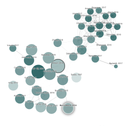 Connected Papers $0-$3/month researchers entering unfamiliar fields Connected Papers Visual academic paper graph that maps the conceptual neighborhood around a seed paper using Semantic Scholar's... Connected Papers 7/10 Consensus 7.5/10 Consensus
 Consensus has the strongest current score signal; check the fit rows before treating that as universal.
Try Consensus free Connected Papers $0-$3/month
Review Connected Papers Connected Papers Visual academic paper graph that maps the conceptual neighborhood around a seed paper using Semantic Scholar's...
Review Connected Papers Connected Papers Visual academic paper graph that maps the conceptual neighborhood around a seed paper using Semantic Scholar's...
Review Connected Papers Consensus AI-powered academic paper search. Consensus Meter shows study agreement. Indexes 200M+ peer-reviewed papers...
Review ConsensusThere is no universal winner. Use the score spread, price signals, and latest product changes below before choosing.
Open Consensus reviewNo recent news update is attached to these tools yet.
Canonical facts
Volatile details are generated from each tool page so model names, context windows, pricing, and capability rows update site-wide from one source.
Connected PapersConsensus| Fact | Connected Papers | Consensus |
|---|---|---|
| Flagship / model | Connected Papers | Consensus |
| Best paid tier / price | $0-$3/month | $0-$11.99/month |
| Best for | Connected Papers is best for researchers who want a visual map of papers related to a seed work, including prior and derivative work exploration during literature review. | Research teams and students who need literature search with paper-level answers, study summaries, and a quick read on whether the evidence agrees. |
Connected Papers and Consensus are two tools for academic research discovery as of April 2026. Connected Papers visualizes paper connections via similarity graphs; Consensus uses AI to summarize and extract insights from research papers.
Consensus fits workflows needing direct answers and evidence extraction from papers. Connected Papers suits visual exploration of related literature.
| Connected Papers | Consensus | |
|---|---|---|
| Flagship | Graph-based similarity visualization (v1.1.3) | AI research agent with evidence extraction (powered by GPT-5.3, Claude Opus 4.7) |
| Price | Free basic; Pro $3/mo or $36/yr | Free basic; Plus $8.99/mo or $96/yr; Pro $22.99/mo |
| Context Window/Output Specs | Unlimited graph nodes; 200 papers max per graph | 2M token context; extracts key findings, P-values, study sizes |
| Best For | Visual literature mapping | Synthesizing answers from 200M+ papers |
Connected Papers emphasizes visual networks to uncover hidden paper relationships through algorithms matching titles, abstracts, and references. Consensus acts as a search engine with AI agents that parse full texts for answers, providing verdict summaries like “Yes, with strong evidence” alongside citations. Pricing reflects this: Connected Papers Pro at $3/month supports more graphs; Consensus Plus at $8.99/month unlocks advanced synthesis. Output from Connected Papers is static graphs; Consensus delivers prose answers with extracted data.
Researchers mapping literature visually for reviews or classes. Teams needing citation graphs without text analysis.
Users querying specific research questions needing evidence pulls. Groups synthesizing meta-insights from large paper sets.
Choose Connected Papers for graph-based discovery at low cost. Opt for Consensus when extracting answers and metrics from papers matters more. Many combine both for comprehensive workflows.
Which is cheaper?
Connected Papers Pro at $3/month undercuts Consensus Plus at $8.99/month; both have capable free tiers.
Which has better output quality?
Consensus provides cited answers with extracted data; Connected Papers offers reliable similarity graphs without interpretation.
Can I use both?
Yes, start with Connected Papers graphs to find papers, then query Consensus for insights.
Every tool page is re-verified on a recurring cycle, and corrections land faster when readers flag them directly. If you spot a stale fact, a missing capability, or have used Connected Papers vs Consensus and want to share what worked or didn't, the editorial desk reviews every message sent through this form.
Email editorial@aipedia.wiki